Nvidia DGX Station: The Desktop Supercomputer with 20 PFLOPS Power
What 20 PFLOPS Actually Means
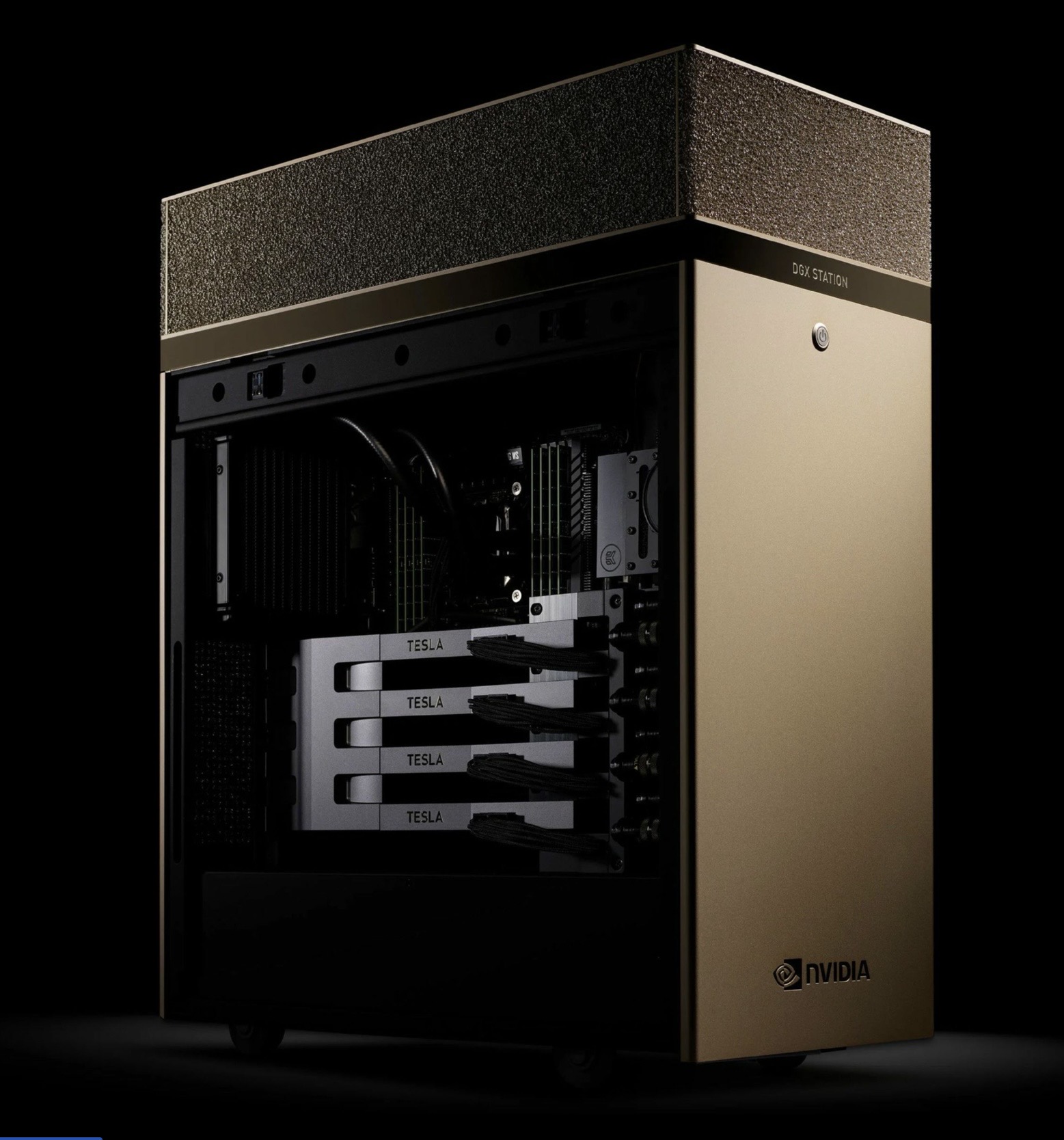
To appreciate the stakes, it helps to understand the scale. A petaFLOP is one quadrillion (10¹⁵) floating-point operations per second. The DGX Station's 20 PFLOPS means it executes 20 × 10¹⁵ operations every second, continuously. That is genuinely extraordinary for a machine that fits beside a desk and runs on standard office power.
The natural question a technically ambitious business asks is: could we use this to train our own large language model thats comparable to GPT 4 Model?
It is a reasonable question in 2026, and the answer is instructive.
The Training Math Nobody Talks About
Consider the benchmark case: training a model comparable in scale to GPT-4. Industry researchers, including analysts at Epoch AI, estimate that GPT-4's training required approximately 2.15 × 10²⁵ FLOPs of total compute. Running the numbers against the DGX Station's 20 PFLOPS throughput produces a sobering result.
At a theoretical peak of 100% efficiency: a condition that is physically impossible to sustain: the machine would complete the task in roughly 34 years. In the real world, AI training hardware operates at what engineers call Model FLOPs Utilization (MFU), which accounts for the overhead of moving data between memory and the processor. For a model as complex as GPT-4, MFU typically falls between 30% and 45%.
| Scenario |
Hardware Efficiency (MFU) |
Estimated Training Time |
| Theoretical Peak |
100% |
~34 Years |
| Highly Optimised |
45% |
~75 Years |
| Typical Real-World |
33% |
~103 Years |
This is not a flaw in the DGX Station. It is a fundamental illustration of why hyperscale data centres exist.
When OpenAI trained GPT-4, the job took approximately three to four months: not because they had a faster machine, but because they had roughly 25,000 NVIDIA A100 GPUs working in parallel, delivering over 15,000 sustained PFLOPS across a purpose-built cluster. Parallelism, not raw per-unit performance, is what makes large-scale model training tractable.
For completeness, consider the other end of the spectrum. The most powerful AI-capable gaming laptop available in 2026: equipped with an NVIDIA RTX 5090 Mobile: delivers approximately 0.12 PFLOPS of real-world training throughput after accounting for thermal throttling and cooling overhead. Training a GPT-4-scale model on that hardware would take an estimated 238 years, compounded by the fact that the laptop's 24 GB of VRAM could hold only a fraction of the model's 1.76 trillion parameters. The overwhelming majority of training time would be spent moving data between storage and the GPU, pushing the realistic estimate into the thousands of years.
The Cost Picture: Hardware, Cloud, and the Hidden Fees
Understanding the economics requires honest pricing across all options.
The DGX Station is available in two principal configurations in 2026. The entry-level DGX Spark: essentially a compact "mini-PC" built on DGX architecture: starts at approximately $4,700 and delivers around 1 PFLOPS of AI performance. The full-power DGX Station, featuring the GB300 Grace Blackwell superchip and 748 GB of unified memory, is currently listed in the $95,000 to $110,000 range. Enterprise rack units such as the DGX B200 escalate further still, to approximately $515,000.
Purchase price, however, is only the beginning of the on-premise cost story. A machine running at high utilisation requires dedicated cooling, stable power infrastructure, ongoing maintenance contracts, and crucially skilled personnel to operate and manage it. Annualised, these operational costs can add substantially to the total cost of ownership, often extending the payback period well beyond initial projections.
Azure OpenAI fine-tuning, by contrast, is structured around consumption-based pricing. A one-time fine-tuning run on a 100 MB dataset of company documents (approximately 75 million tokens) would cost in the range of $400 to $600 for training alone. The less obvious line item is the monthly hosting fee: approximately $1,250 per month simply to keep a custom fine-tuned model available: plus inference charges at two to three times the standard API rate. A realistic first-month cost for a production fine-tuned deployment lands around $2,400, scaling from there with usage.
The laptop, meanwhile, is genuinely compelling for individual experimentation. An RTX 5090 Mobile system costs between $3,500 and $5,300 depending on configuration: and for fine-tuning smaller open-source models using techniques like QLoRA, it performs admirably. Taking a model such as Llama 3 8B and adapting it to a specific domain or writing style is achievable in two to six hours on such hardware.
The Cloud Advantage in Commercial Contexts
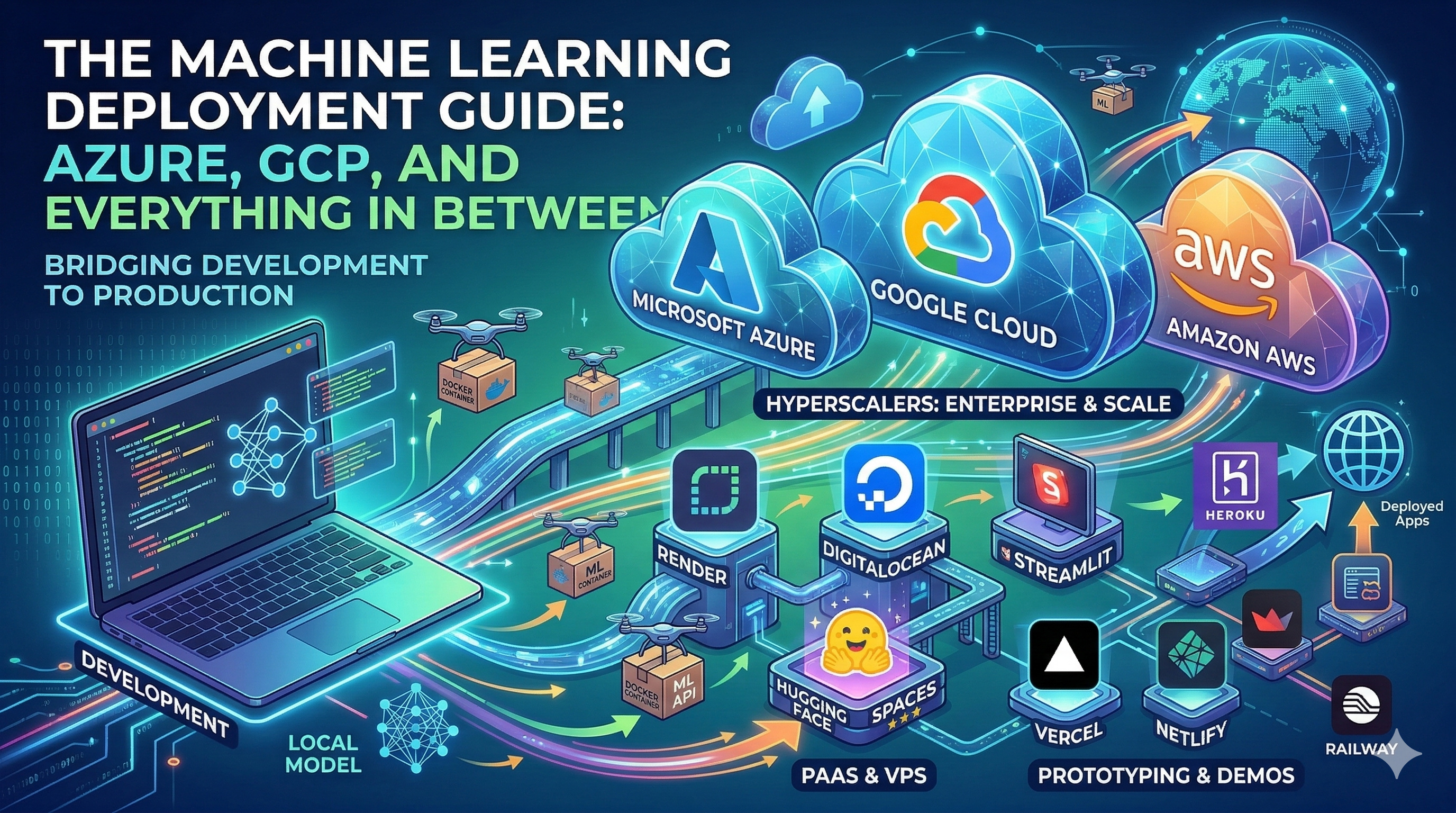
For businesses building production AI applications, the cloud's economic logic is difficult to argue against. Azure and AWS do not simply offer raw compute, they offer managed infrastructure, elastic scaling on demand, guaranteed uptime SLAs, and the elimination of capital expenditure in favour of predictable operational costs.
The DGX Station, by contrast, commits a company to a fixed asset that depreciates, requires specialised maintenance, and cannot scale horizontally when demand spikes. If the machine sits underutilised for three months while a project is in planning, the cost clock still runs. If the team grows and needs twice the compute, purchasing a second unit means doubling the capital outlay.
The payback period analysis is stark. At $100,000 for the hardware plus reasonable operational costs, a business would need to demonstrate that on-premise compute generates more value than an equivalent cloud spend over a multi-year horizon: a difficult case to make for most commercial applications, particularly when Azure also absorbs the engineering burden of infrastructure management.
Where the DGX Station Does Make Sense
None of this is to say the DGX Station is a poor product. It is an exceptional machine. The question is simply one of fit.
There is a class of organisation for which on-premise, air-gapped compute is not merely preferable but mandatory. Healthcare institutions working with patient data, military contractors operating under classified information protocols, and government-sponsored AI research programmes all face regulatory or security requirements that make cloud infrastructure genuinely unsuitable: regardless of how mature vendor compliance frameworks have become. For these organisations, the DGX Station's 748 GB of unified memory and 20 PFLOPS of local compute represent something the cloud cannot replicate: absolute data sovereignty.
Similarly, academic and industrial research teams pursuing fundamental AI science: rather than commercial product development benefit from the creative freedom that owned infrastructure provides. There are no per-token charges, no rate limits, and no dependency on a third party's model catalogue. A research team can run unconventional architectures, long-running experiments, and exploratory workloads without the cost unpredictability that cloud billing introduces.
Government-funded AI initiatives, in particular, represent a natural constituency for the DGX Station. Where funding cycles are annual and procurement favours capital assets over operational subscriptions, and where security classification demands physical control of compute, the economics of ownership shift considerably.
The Practical Summary
The DGX Station is a genuine engineering achievement, and the excitement it generates is warranted. Twenty petaFLOPS in an office-deployable form factor would have been science fiction a decade ago. But capability and commercial value are not the same thing, and the mathematics of large-scale AI training make clear that a single machine however powerful is not a substitute for a distributed compute cluster when the goal is training frontier models from scratch.
For businesses evaluating their AI infrastructure strategy in 2026, the decision framework is fairly clear:
For experimentation and individual development work, a high-end laptop remains the most cost-effective entry point. For production AI applications and fine-tuned model deployments, managed cloud services like Azure offer the combination of scalability, reliability, and total cost efficiency that most commercial teams need. For serious AI engineering teams requiring local compute for proprietary data work, the DGX Station earns its place but with clear eyes about what it can and cannot do.
And for regulated industries, national security applications, and government research, the DGX Station is not merely justifiable: it may be the only viable option.
The desktop supercomputer has arrived. The question every business must answer honestly is: does that solve the problem you actually have?
The compute estimates in this article are based on industry research and publicly available analyses of large language model training requirements. Pricing reflects market conditions as of Q1 2026.