Business Use Cases of Data Science
What exactly is Data Science?
Data Science is the practice of turning data into better business decisions.
In simple terms, it combines statistics, programming, and domain knowledge to find patterns in your company's data, predict what may happen next, and recommend actions. A business executive can think of it as a decision engine: it helps a company move from “we think” to “the data shows.”
For example, data science can help answer questions like:
Which customers are most likely to stop patronising us?
What products should we stock more of?
Which sales leads are worth pursuing first?
How can we reduce costs without hurting quality?
Its value to a business usually falls into four areas:
- understanding what happened,
- explaining why it happened,
- predicting what will happen, and
- suggesting what to do about it.
So, data science is not just about creating data reports or dashboards. It is about using data to increase revenue, reduce risk, increase efficiency, and make smarter strategic business decisions.
How can data science help to understand what is happening and why in my business?
Let's say you own a supermarket and noticed that a particular product (butter) on the shelf is not selling as fast as you expect it to sell. You are confused because you know your supermarket is located where people are demanding for butter but it's still not selling much in your supermarket. All you can see is the low contribution of butter sales to your company's overall revenue. What exactly is happening?
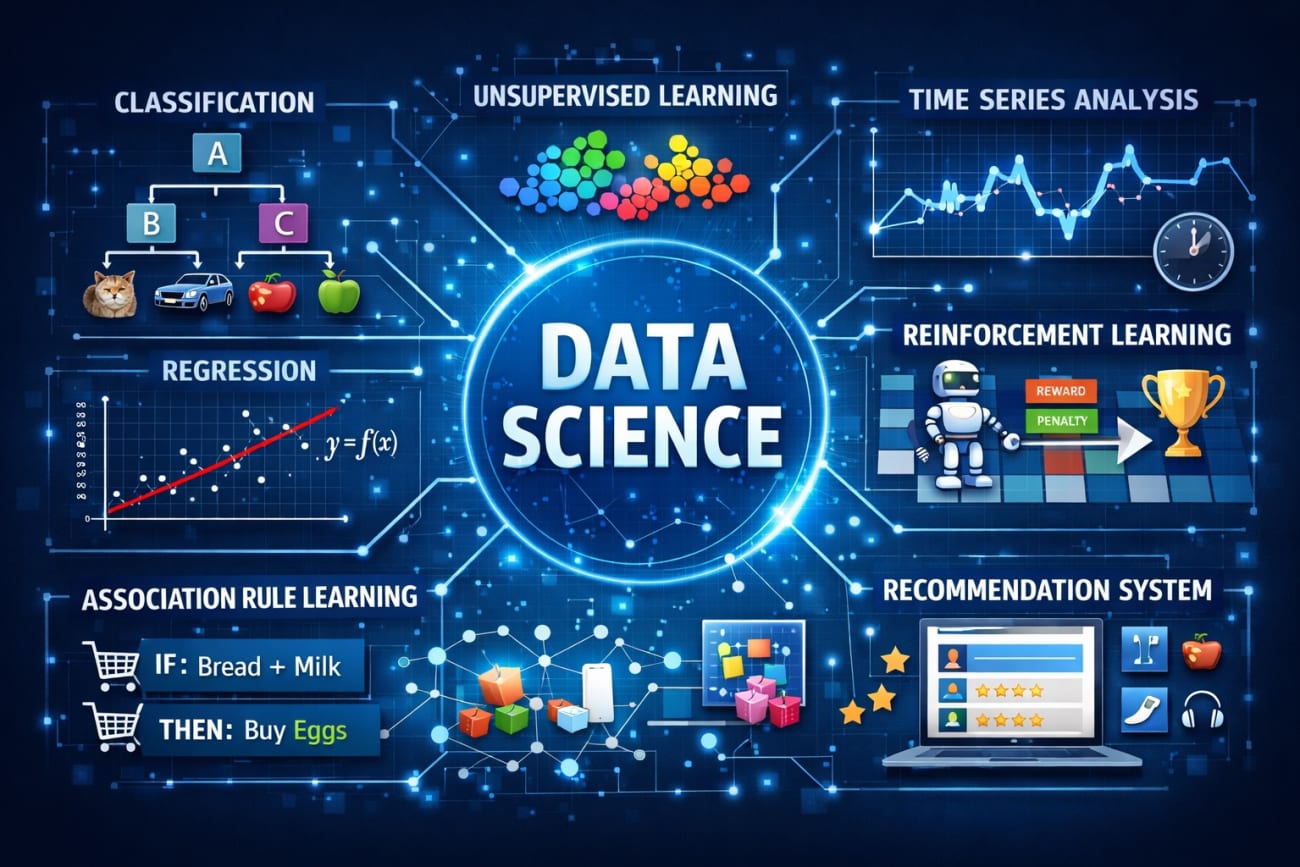
Data Science can answer this question for you in different ways, a promising way it can answer this particular question is through Association Rule Learning.
Association rule learning is a way to find patterns in what customers buy, do, or choose together.
Think of it like this: if people often buy bread and butter together, the system notices that pattern. If someone buys bread, there is a good chance they may also buy butter. In business, this helps you discover “things that go together” without guessing.
So how does this information translates to helping my business in reality? You went back to the shelf where butter is located in your supermarket and realised that butter is placed very far away from where bread is located. Then it became apparent to you that whenever customers buy bread, they look around and do not see butter close-by, then they move on to buy other things unrelated to bread, later forgetting that they need butter for that bread.
After running association rule learning algorithms on the purchase data of customers from your point of sale system, we informed you that there are fifteen other product groups that are frequently purchased together by customers in your supermarket. You looked through the product groups and decided to do a rearrangement of product locations in your supermarket. Who would have thought that the location of products on the shelf has an impact on how many products an average customer would buy?
How can data science help to predict what is going to happen and what to do about it in my business?
Let's say you are a real estate agent and you help clients find properties to buy or rent. As an agent who is serious with your business, you usually give KYC (know your customers) form to your clients to fill online before they come for property inspections. So far so good you have over 100 clients with their KYC information. You are currently facing a serious issue of identifying serious clients from window shoppers. A lot of time, whenever a client appears to be serious about buying a property, they end up not buying because they were simply window shopping. This takes a toll on your mental health because of the physical stress of driving around, not to mention the cost of commuting looking for properties.
How do I quickly filter out unserious clients so as not to waste my time and money?
Data Science can answer this question for you by using a combination of different techniques such as Classification modelling and clustering.
Classification modelling and clustering has practical direct usage in customer segregation.
Customer segregation is the practice of dividing customers into different groups based on their shared characteristics, so a business can serve each group more effectively.
For a business executive, think of it this way: not all customers have the same needs, buying power, urgency, or value to the company. Segregation helps you avoid treating everyone the same and instead tailor pricing, marketing, service, and product offers to the right people.
So how does this information helps me to know which clients to put more business effort into?
We would collect the KYC forms you have been obtaining from your clients and potential clients so far. The information and different characteristics of the customers would be arranged in a dataset and used to train a classification model. This model can then be used to directly predict the most likely behaviour of a potential customer you encounter in future and this is not something ChatGPT can do for you.
So after getting the classification model from us, you are able to know ahead of time, if a customer is most likely a window shopper or not based on the information they filled and the information they refused to provide in the KYC. Who would have thought that KYC form has such powers and I haven't been using it all these while?
These two examples are just a few among several different ways data science makes your business more prosperous.
Reach out to us for a clarity session to find out how Data Science can specifically solve your business problem or answer critical business questions you might have by following the link below:
CONTACT US