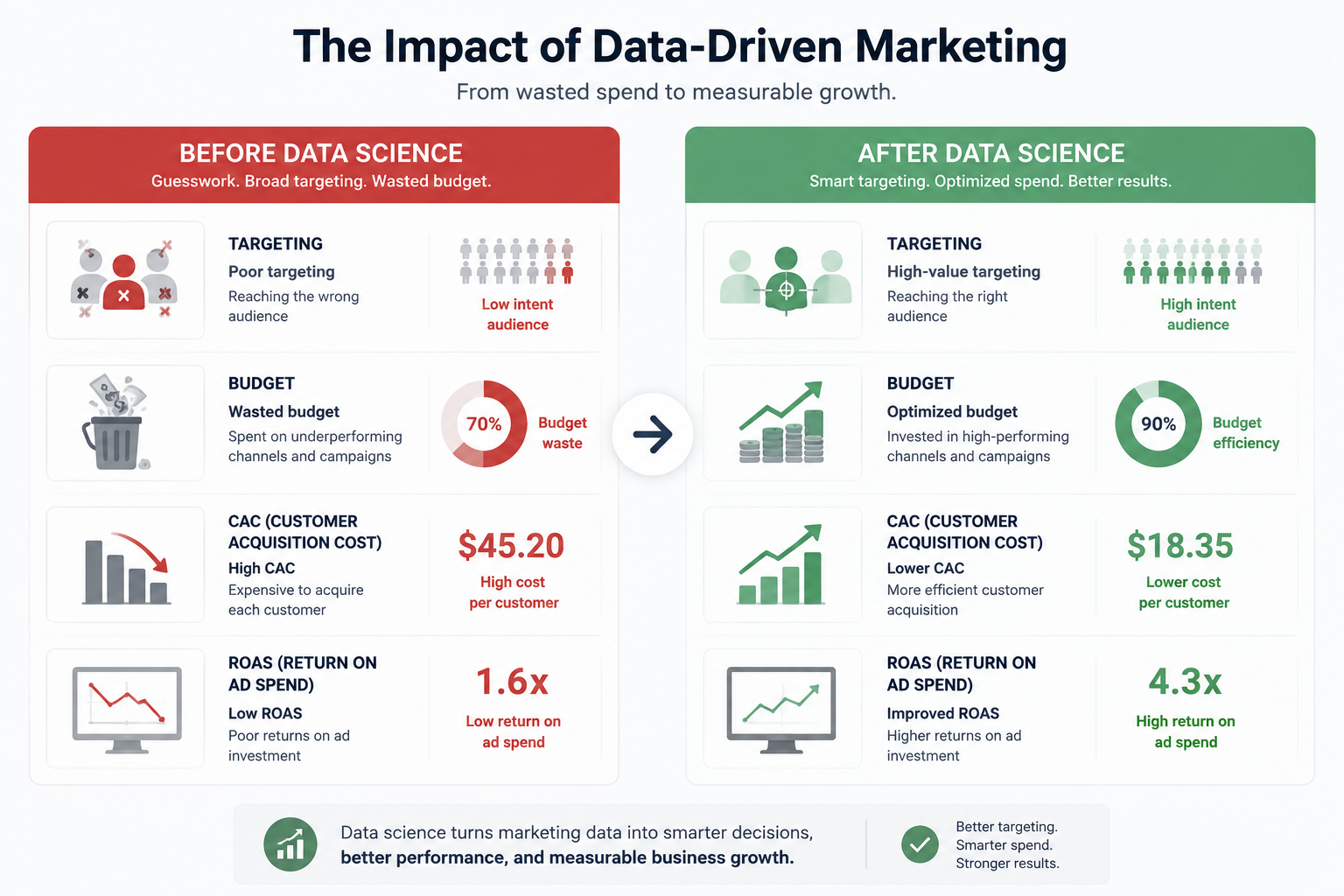
Forecasting Business Growth with Confidence, not Assumptions
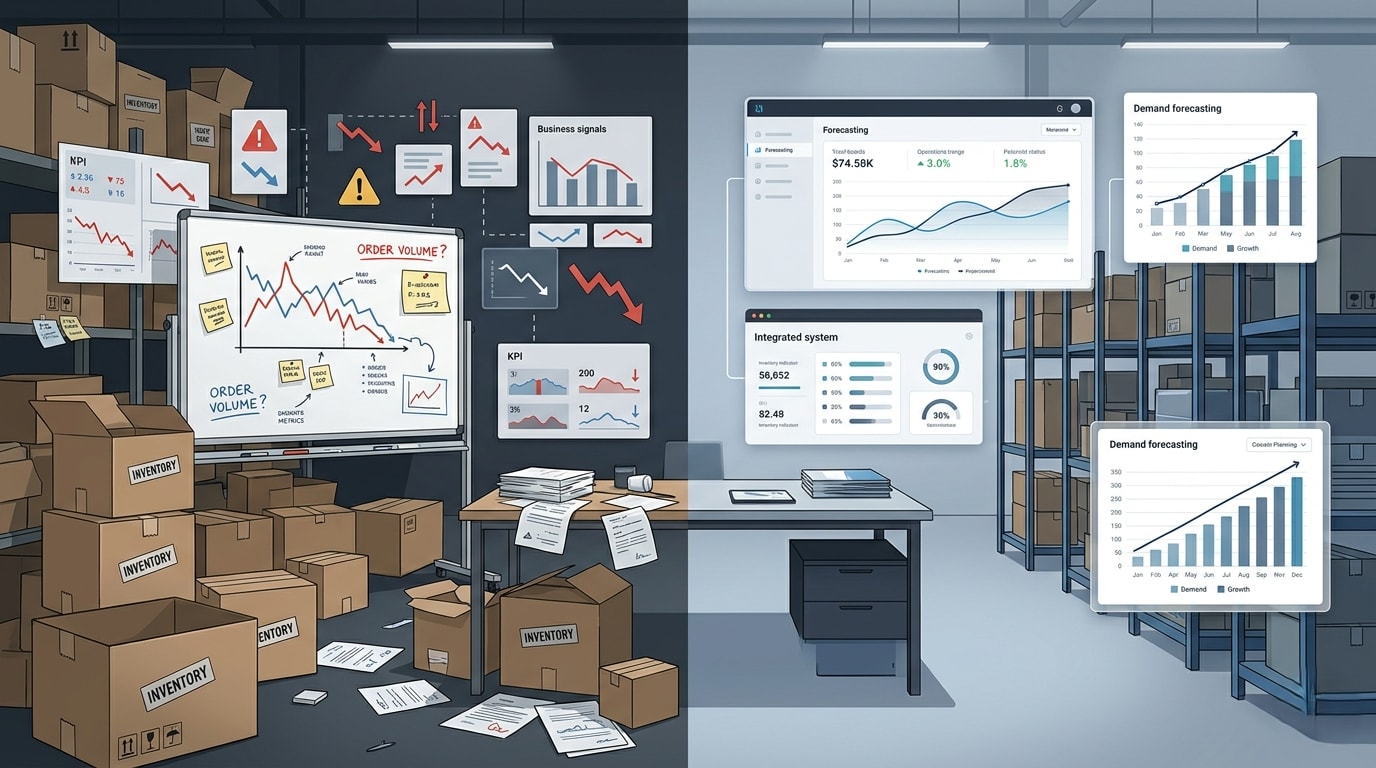
Most growth plans don’t fail because of poor strategy. They fail because they’re built on shaky assumptions.
A sales target is increased because “last year went well.” Production is scaled based on rough estimates. Expansion decisions are made on instinct. And when results fall short, businesses are left reacting instead of leading.
In a market where conditions shift quickly, guessing is no longer a harmless shortcut; it’s a risk.
The difference between companies that grow consistently and those that stall often comes down to one thing: how clearly they can see what’s coming next.
The Hidden Cost of Guesswork in Business Growth
Guesswork doesn’t usually show up as a single big mistake. It shows up as small, repeated miscalculations that quietly erode performance.
A product line slightly overproduced.
A sales forecast that’s just a bit too optimistic.
An expansion decision made a quarter too early.
Individually, these seem manageable. Together, they create:
-
Cash tied up in unsold inventory
-
Missed revenue due to stockouts or poor timing
-
Operational inefficiencies across teams
-
Reduced confidence from investors and stakeholders
We’ve seen businesses with strong products and capable teams struggle not because they lacked ambition, but because their planning lacked precision.
When decisions are based on incomplete insight, even the right strategy can produce the wrong outcome.
How Data-Driven Forecasting Changes the Game
Data-driven forecasting brings structure and clarity to growth planning.
Instead of relying on assumptions, it uses your historical data, such as sales patterns, customer behaviour, seasonality, and external factors, to project what’s likely ahead.
But more importantly, it translates that data into decisions.
It answers questions like:
-
How much demand should we realistically expect next quarter?
-
When will demand spike, and when will it slow down?
-
What happens if market conditions shift?
This approach allows you to plan with intent, not guesswork.
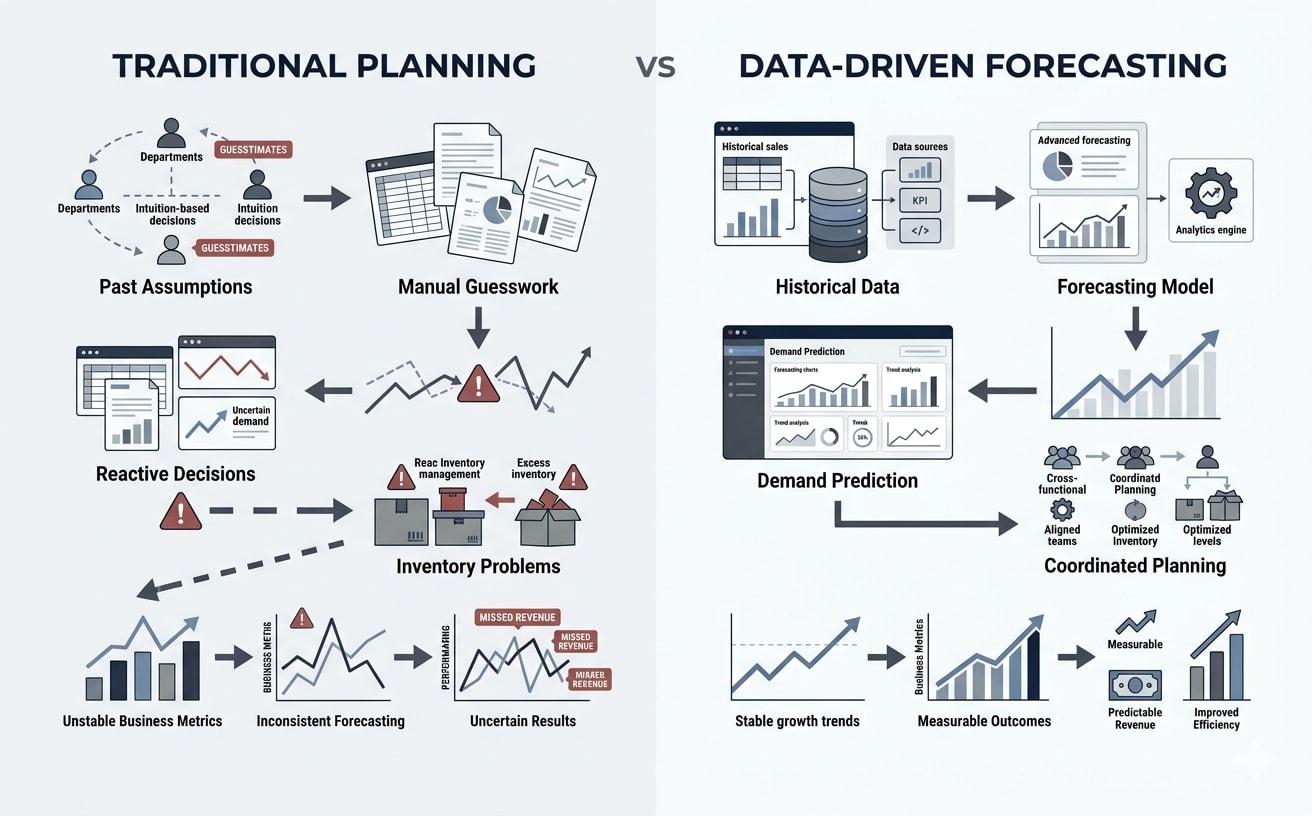
You move from:
-
Reacting to demand → anticipating it
-
Estimating growth → measuring and validating it
-
Making isolated decisions → aligning strategy across the business
The result is not just better forecasts, it’s better control over how your business grows.
Real-World Example: Smarter Production Planning in Manufacturing
A mid-sized manufacturing company we worked with faced a familiar challenge.
Every year, they experienced the same cycle:
-
Demand would surge, and they couldn’t keep up
-
They ramped up production too late
-
Then overshot, ending up with excess inventory
Their planning was based on historical averages, with minimal adjustment for changing patterns. It worked “well enough”, until it didn’t.
By introducing a data-driven forecasting approach, we helped them analyze:
-
Seasonal demand fluctuations across multiple years
-
Differences in regional buying patterns
-
Growth trends across product categories
-
External factors influencing purchasing behaviour
The insights were immediate and actionable.
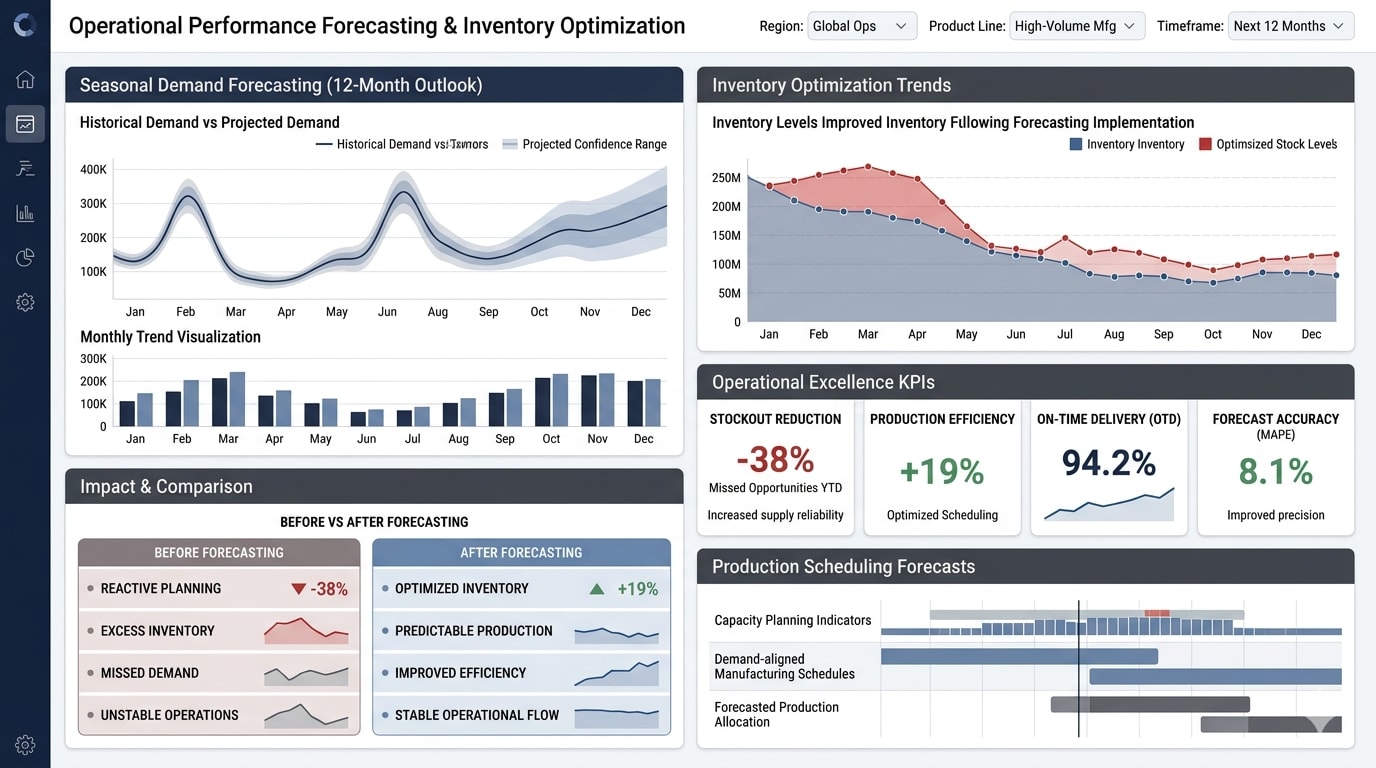
Production schedules were adjusted ahead of demand spikes. Slower periods were planned for, not reacted to. Inventory levels became intentional rather than accidental.
Within a short period, the company:
-
Reduced stockouts during peak periods
-
Lowered excess inventory significantly
-
Improved production efficiency without increasing capacity
The biggest shift wasn’t just operational, it was strategic. Decisions were no longer based on “what usually happens,” but on what the data clearly indicated.
Business Impact: From Uncertainty to Control
When forecasting improves, decision-making changes at every level of the business.
More predictable revenue
You capture demand when it happens, rather than missing it due to poor timing or planning.
Lower financial risk
Fewer surprises mean fewer costly corrections, whether in inventory, staffing, or investment.
Stronger investor confidence
Clear, data-backed projections build credibility and trust with stakeholders.
Better alignment across teams
Sales, operations, and finance work from the same realistic expectations, not conflicting assumptions.
Ultimately, forecasting turns growth from something you hope for into something you can manage and guide.
Why It Matters for Modern Businesses
Today’s business environment doesn’t reward guesswork.
Customer behaviour evolves quickly. Markets shift. External pressures from economic changes to supply chain disruptions can alter outcomes in ways that intuition alone can’t track.
Companies that continue to rely on outdated planning methods often find themselves constantly catching up.
The ones that move ahead are those who invest in understanding their data and using it to make smarter decisions before market forces force them to.
This isn’t about replacing human judgment. It’s about strengthening it with evidence.
Conclusion
Growth will always involve uncertainty, but it shouldn’t rely on assumptions.
With the right data and the right approach, you can plan ahead with clarity, respond to change with confidence, and make decisions that are grounded in reality, not guesswork.
If your current forecasting process leaves too much to intuition, it may be time to rethink how your business plans for growth, and what more accurate, data-driven insight could unlock.
Contact US