From Customer Complaints to Competitive Advantage: Turning Feedback Into Smarter Business Decisions
Your Customers Are Constantly Telling You Where the Business Can Improve
Every day, customers leave behind valuable signals about your business.
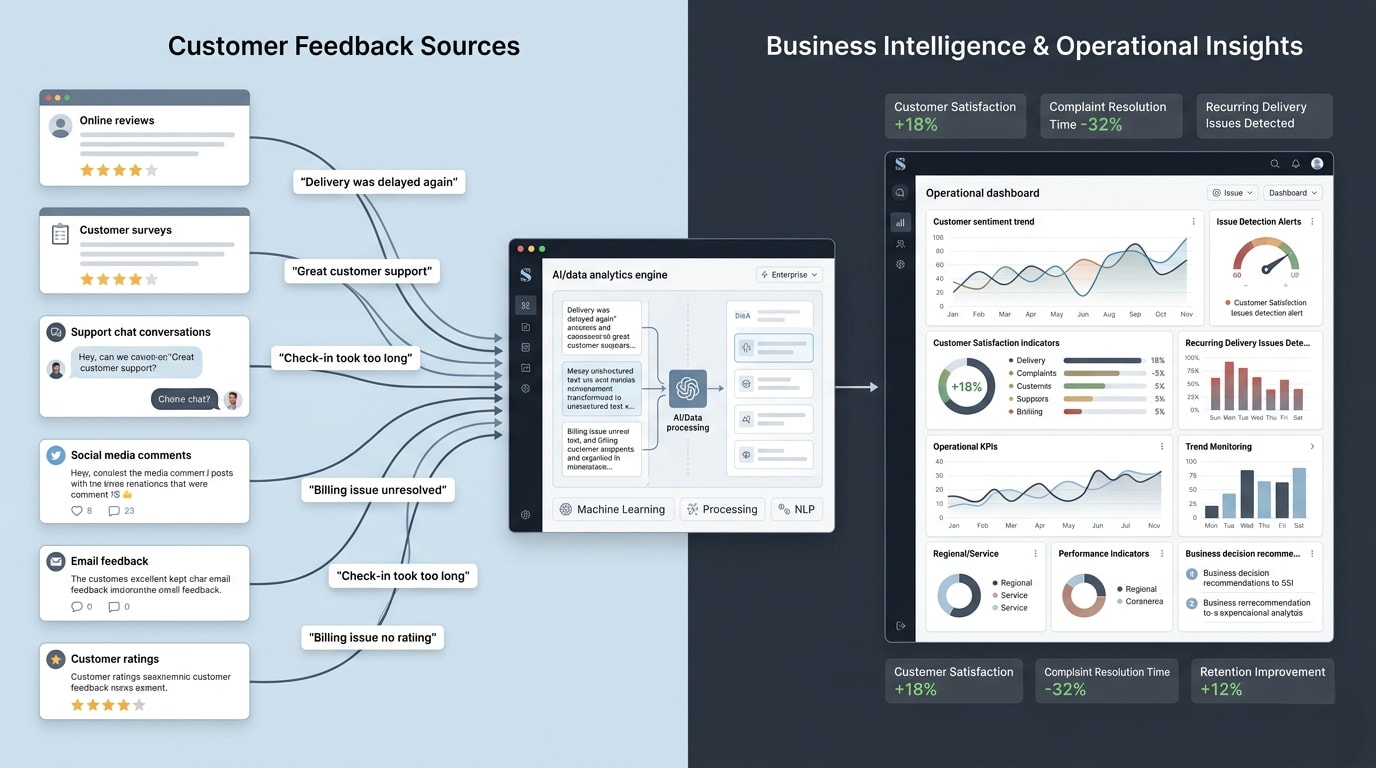
They write reviews after hotel stays. They respond to surveys. They contact support teams. They post frustrations on social media. They praise great experiences in online comments.
Most businesses already collect this feedback.
Very few know how to use it effectively.
As customer interactions grow across multiple platforms, organizations often find themselves sitting on large volumes of unstructured information with no clear way to extract meaningful insight from it. Important patterns become buried in thousands of comments, emails, ratings, and support conversations.
The result is delayed decision-making, recurring service issues, and missed opportunities to improve customer experience.
This is why more businesses are turning to data science, not as a trend, but as a practical way to listen to customers at scale and make better operational decisions.
The Real Problem Isn’t Data Collection, It’s Interpretation
Many companies assume that collecting customer feedback is enough.
In reality, feedback only becomes valuable when it leads to action.
The challenge is that customer feedback is rarely organized in a way that makes decision-making easy. Customers describe the same issue differently. Some provide detailed explanations while others leave short emotional reactions. Feedback is spread across surveys, reviews, emails, live chats, and social media platforms.
Without a structured approach to analysis, leadership teams often rely on:
This creates blind spots across operations, customer service, and product delivery.
A recurring operational issue can quietly affect hundreds or thousands of customers before management fully recognizes the scale of the problem.
Customer feedback is one of the few business data sources that reflects operational performance in real time. Businesses that fail to analyze it properly often react too slowly to changing customer expectations.
How Data Science Turns Customer Feedback Into Actionable Insight
Data science helps businesses transform scattered customer opinions into structured, measurable intelligence.
Instead of manually reviewing endless comments, companies can automatically and consistently identify patterns, trends, and operational risks.
The goal is not to replace human judgment. It is to give decision-makers clearer visibility into what customers are experiencing and why it matters.

Understanding Customer Sentiment
Sentiment analysis helps businesses measure how customers feel about products, services, or specific interactions.
Rather than focusing solely on star ratings, businesses can understand the emotional tone in customer language and monitor how perceptions change over time.
For example:
-
Are customers becoming increasingly frustrated with delivery delays?
-
Did satisfaction drop after a policy change?
-
Are service improvements generating more positive reviews?
This allows businesses to detect issues earlier and respond before dissatisfaction begins affecting retention or reputation.
Identifying Recurring Problems and Opportunities
One of the biggest advantages of data science is the ability to uncover repeated themes hidden inside large volumes of feedback.
Customers may describe the same issue in different ways:
Analytics tools can group these comments together and reveal broader operational patterns that may otherwise go unnoticed.
At the same time, businesses can identify what customers consistently value most, such as:
-
fast service
-
responsive support
-
product reliability
-
personalized experiences
This creates a clearer picture of both operational weaknesses and competitive strengths.
Tracking Trends Before They Become Bigger Problems
Customer expectations change quickly.
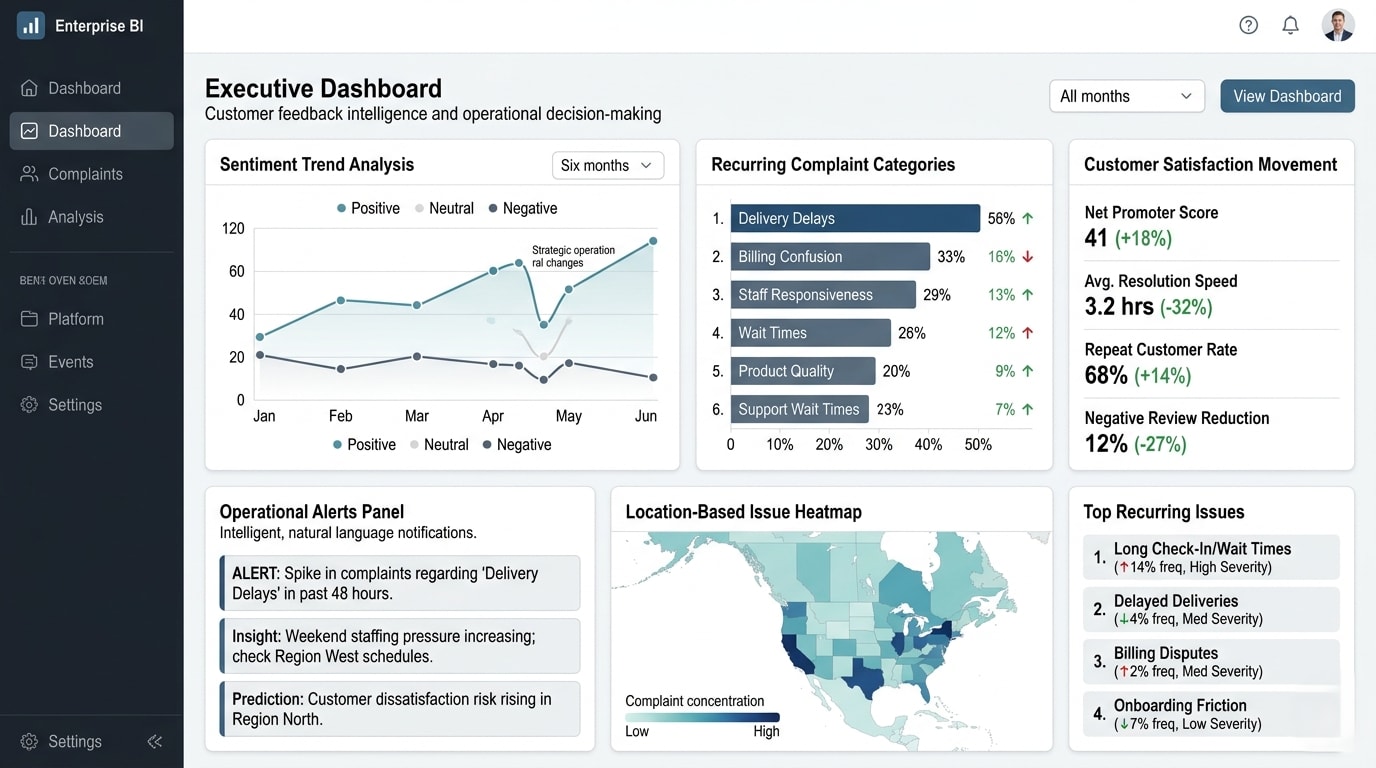
Trend analysis helps organizations monitor how feedback evolves across locations, products, services, or time periods.
This is especially valuable for businesses operating at scale.
For example, leaders can identify:
-
rising complaints in specific regions
-
service quality declines during peak periods
-
recurring issues linked to staffing shortages
-
changes in customer sentiment after operational changes
Instead of reacting months later, businesses gain the ability to act earlier with better information.
Organizing Feedback Into Clear Business Categories
Data science also helps businesses structure unorganized feedback into meaningful categories, such as:
This makes it easier for operational teams to prioritize improvements and allocate resources where they will have the greatest impact.
When feedback becomes measurable, it becomes manageable.
The Business Impact Is Real and Measurable
Organisations that analyze customer feedback effectively are often able to improve both customer experience and operational performance at the same time.
The benefits extend far beyond reporting dashboards.
Faster Issue Detection
Businesses can identify operational problems earlier, before they escalate into larger customer experience failures.
Improved Customer Satisfaction
When recurring frustrations are addressed quickly, customer experiences improve in measurable ways.
Better Operational Decisions
Leadership teams gain evidence-based insight into what customers are actually experiencing across locations, products, and services.
Increased Customer Retention
Customers are more likely to remain loyal when businesses respond consistently to feedback and improve service quality over time.
Stronger Brand Reputation
Addressing recurring issues early helps reduce negative public reviews and strengthens customer trust.
Smarter Resource Allocation
Businesses can focus their investments and operational improvements on the areas that generate the greatest customer impact.
Hospitality Industry Example: Using Customer Reviews to Improve Operations
Consider a hospitality company managing several hotels across different cities.
The business receives thousands of reviews every month through travel platforms, guest surveys, customer emails, and social media mentions. Leadership understands the importance of customer feedback, but manually reviewing every comment is unrealistic.
The company implements a data science-driven feedback analysis system to organize and analyze guest reviews automatically.
Within a short period, two recurring operational issues become clear:
Previously, these complaints appeared isolated. Individual managers treated them as occasional service failures rather than indicators of larger operational inefficiencies.
The analytics told a different story.
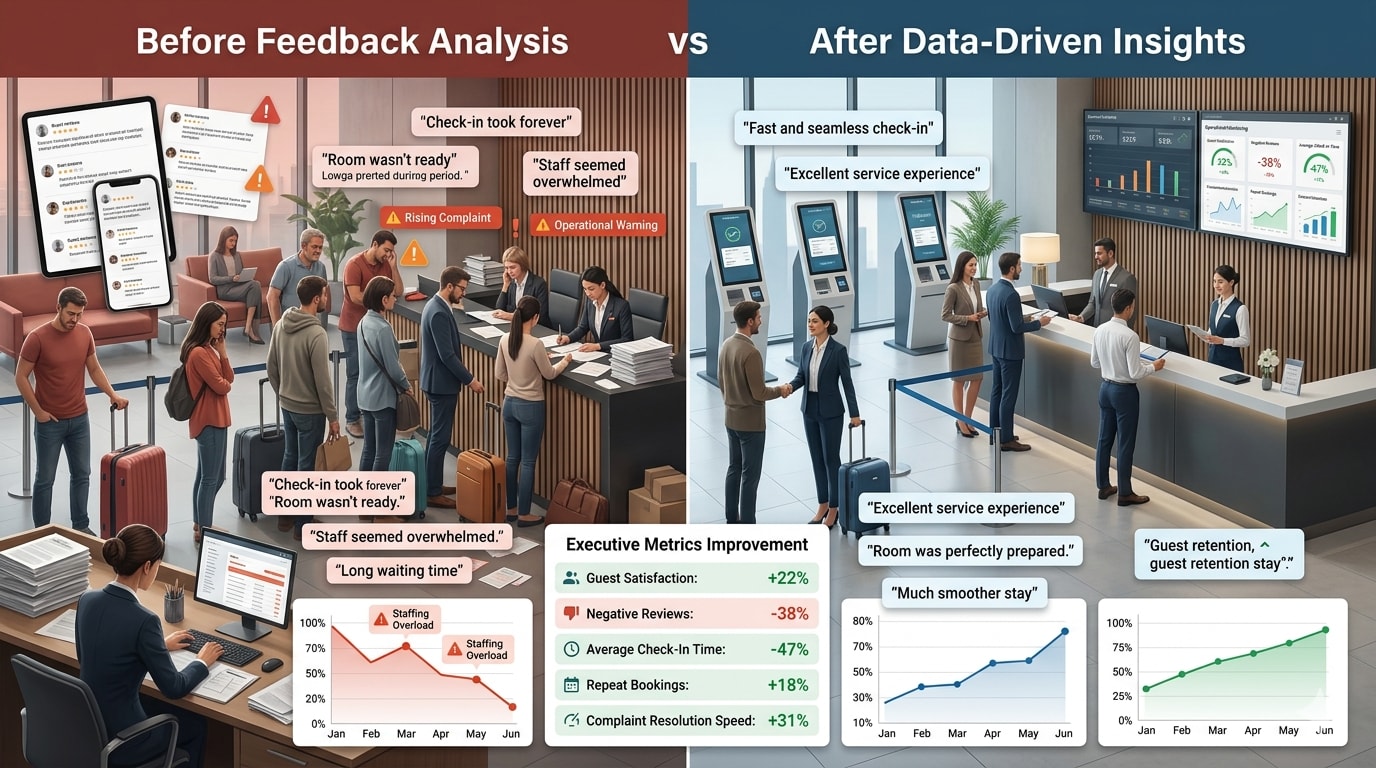
Trend analysis revealed that:
-
check-in dissatisfaction peaked during weekend arrival hours
-
cleanliness complaints increased when occupancy exceeded certain thresholds
-
specific properties experienced repeated staffing pressure during peak demand periods
With clear operational visibility, management took targeted action:
-
increased front desk staffing during peak check-in windows
-
introduced faster digital check-in options
-
adjusted housekeeping schedules based on occupancy forecasts
-
implemented operational monitoring during high-demand periods
Over the following months, the company experienced:
-
improved guest satisfaction scores
-
fewer negative online reviews
-
faster check-in experiences
-
stronger operational consistency
-
increased repeat bookings
The improvement did not come from assumptions.
It came from identifying operational patterns hidden inside customer feedback and acting on them quickly.
Why Businesses That Listen Better Will Compete Better
Customer expectations are no longer shaped only by direct competitors.
They are shaped by the best experiences customers receive anywhere.
A delayed response, inconsistent service experience, or unresolved operational issue can influence customer loyalty faster than many businesses realize.
At the same time, customer feedback volumes continue growing across every channel.
Businesses relying only on manual review processes often struggle to keep up. Important signals are missed. Operational inefficiencies persist longer than necessary. Decision-making becomes reactive instead of proactive.
Organizations that use data science effectively gain a significant advantage:
-
clearer visibility into customer experience
-
faster operational response times
-
stronger alignment between customer expectations and service delivery
-
more confident strategic decision-making
In increasingly competitive markets, the ability to understand customer feedback at scale is becoming a core business capability.
Turning Customer Feedback Into Strategic Business Intelligence
Customer feedback is more than a collection of opinions.
It is a real-time view into operational performance, customer expectations, and business risk.
Hidden inside reviews, support conversations, surveys, and social media comments are insights that can help businesses improve service quality, strengthen customer loyalty, and make smarter long-term decisions.
Data science helps transform that information into structured, actionable intelligence.
The companies that gain the greatest advantage are not necessarily the ones collecting the most feedback.
They are the ones using customer insight to make faster, smarter, and more informed business decisions.
Ready to Make Customer Feedback More Valuable?
We help businesses turn customer feedback into measurable operational insight using practical data science solutions designed for real-world decision-making.
From sentiment analysis and trend monitoring to customer experience intelligence, we help organizations uncover the patterns that drive customer satisfaction, retention, and growth.
If your business is collecting customer feedback but struggling to turn it into action, we can help you unlock the value already hidden inside your data.
Contact US