How Retail Businesses Lose Revenue Without Knowing It and How Data Can Fix It
The Hidden Cost of Revenue Leakage in Retail
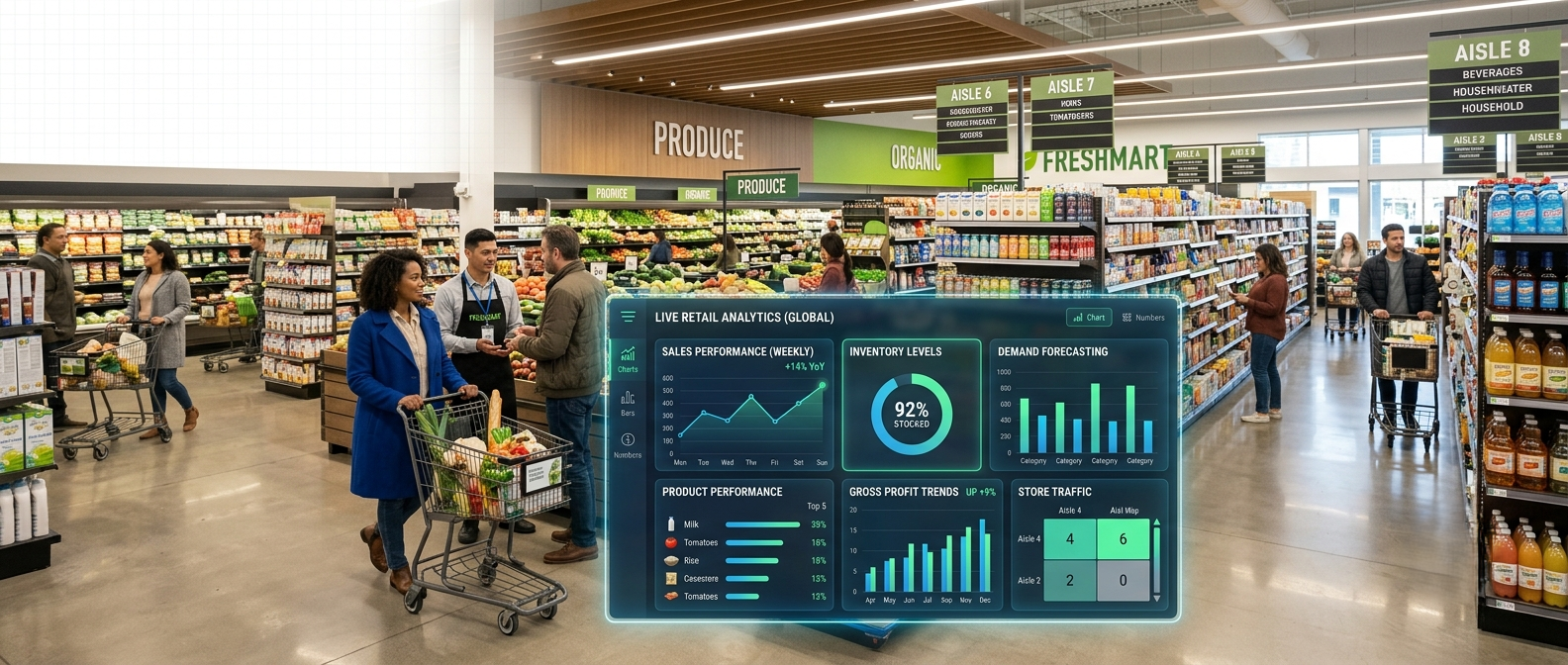
Many retail businesses focus on visible challenges such as rising operating costs, competitive pricing, and changing customer preferences. Yet some of the most significant threats to profitability often go unnoticed.
Revenue leakage occurs when businesses lose potential income through avoidable operational inefficiencies. Unlike a major financial loss that appears immediately on a report, revenue leakage happens gradually; one stockout, one expired product, or one inaccurate purchasing decision at a time.
Over weeks and months, these small losses accumulate into substantial financial impacts. A retailer may see stable sales figures while unknowingly missing thousands or even millions of dollars in revenue opportunities.
The good news is that these losses are often measurable, identifiable, and preventable. With the right use of data, retailers can uncover hidden inefficiencies and make smarter decisions that directly improve profitability.
Where Retail Businesses Lose Money Without Realizing It
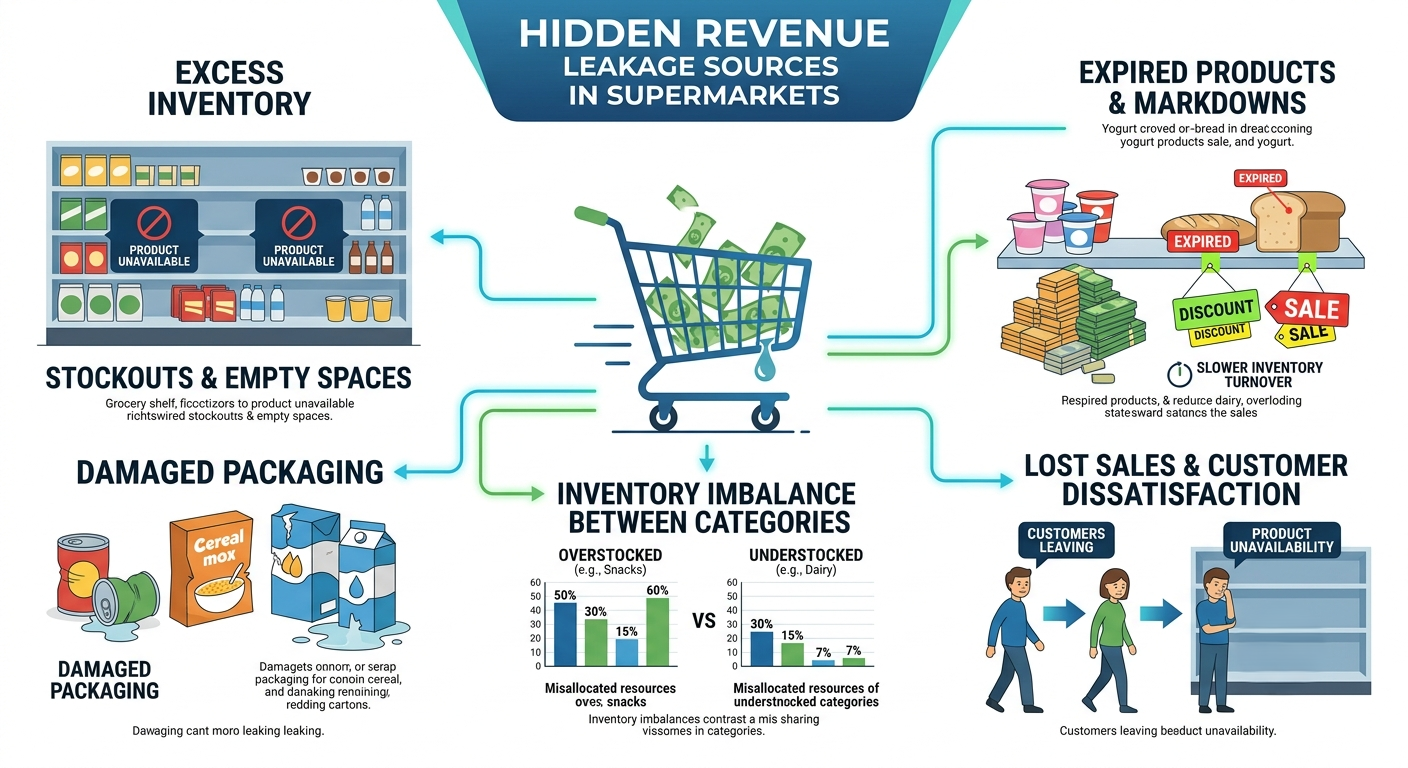
Many revenue losses originate from everyday operational decisions. Because these issues are spread across multiple locations, product categories, and supply chain activities, they can be difficult to detect.
Stockouts of High-Demand Products
Nothing hurts sales faster than empty shelves.
When customers cannot find the products they want, many simply purchase from a competitor. Beyond the immediate lost sale, repeated stockouts can damage customer loyalty and reduce future revenue.
Overstocking Slow-Moving Inventory
To avoid stockouts, retailers often order more inventory than necessary. While this may seem like a safe approach, excess inventory ties up working capital and increases storage costs.
Products sitting on shelves for months represent cash that could be invested elsewhere in the business.
Product Spoilage and Expiration
For supermarkets and retailers handling perishable goods, spoilage is a major source of hidden loss.
Fresh produce, dairy products, baked goods, and other short-shelf-life items can quickly become waste when inventory levels exceed actual demand.
Poor Inventory Allocation Across Locations
In multi-store operations, inventory imbalances are common.
One location may run out of a popular product while another store has excess stock that remains unsold. Without visibility into location-level performance, retailers often miss opportunities to rebalance inventory efficiently.
Inaccurate Demand Planning
Customer demand rarely remains constant.
Seasonal trends, local events, promotions, weather conditions, and changing consumer preferences can all influence purchasing behavior. Retailers that fail to account for these factors often experience either shortages or excess inventory.
Why Traditional Inventory Management Often Falls Short
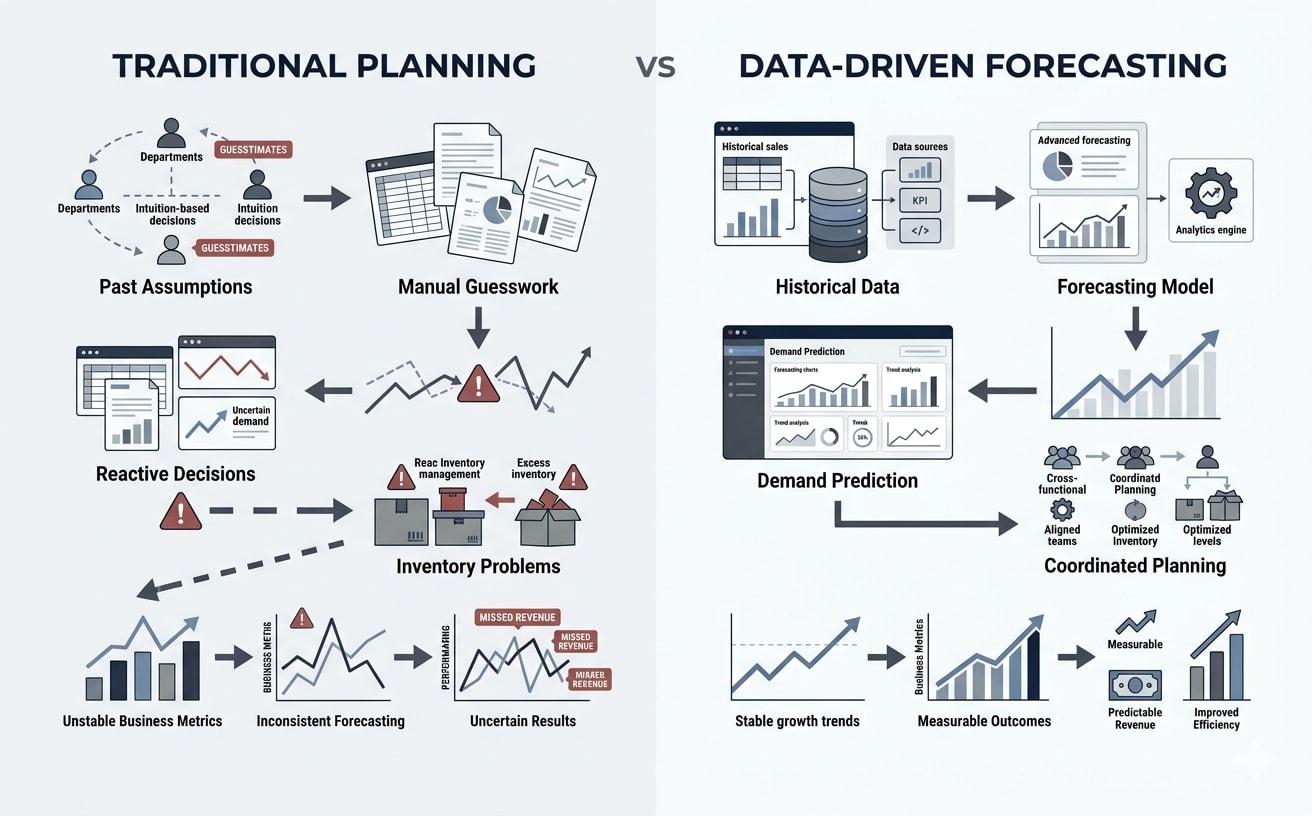
Many inventory decisions are still based on experience, intuition, or historical habits.
While experience remains valuable, modern retail environments are becoming increasingly complex. Businesses manage hundreds or thousands of products across multiple locations, suppliers, and customer segments.
Human judgment alone cannot consistently identify subtle patterns hidden within large volumes of sales and operational data.
For example:
-
A product may appear to sell steadily throughout the year but experience predictable spikes every holiday season.
-
Customer demand may vary significantly between store locations.
-
Certain products may frequently sell together, creating opportunities for better stocking strategies.
-
Inventory issues may develop gradually enough to avoid immediate attention.
Without data-driven insights, retailers often react to problems after they occur rather than preventing them beforehand.
How Data Science Uncovers Hidden Losses
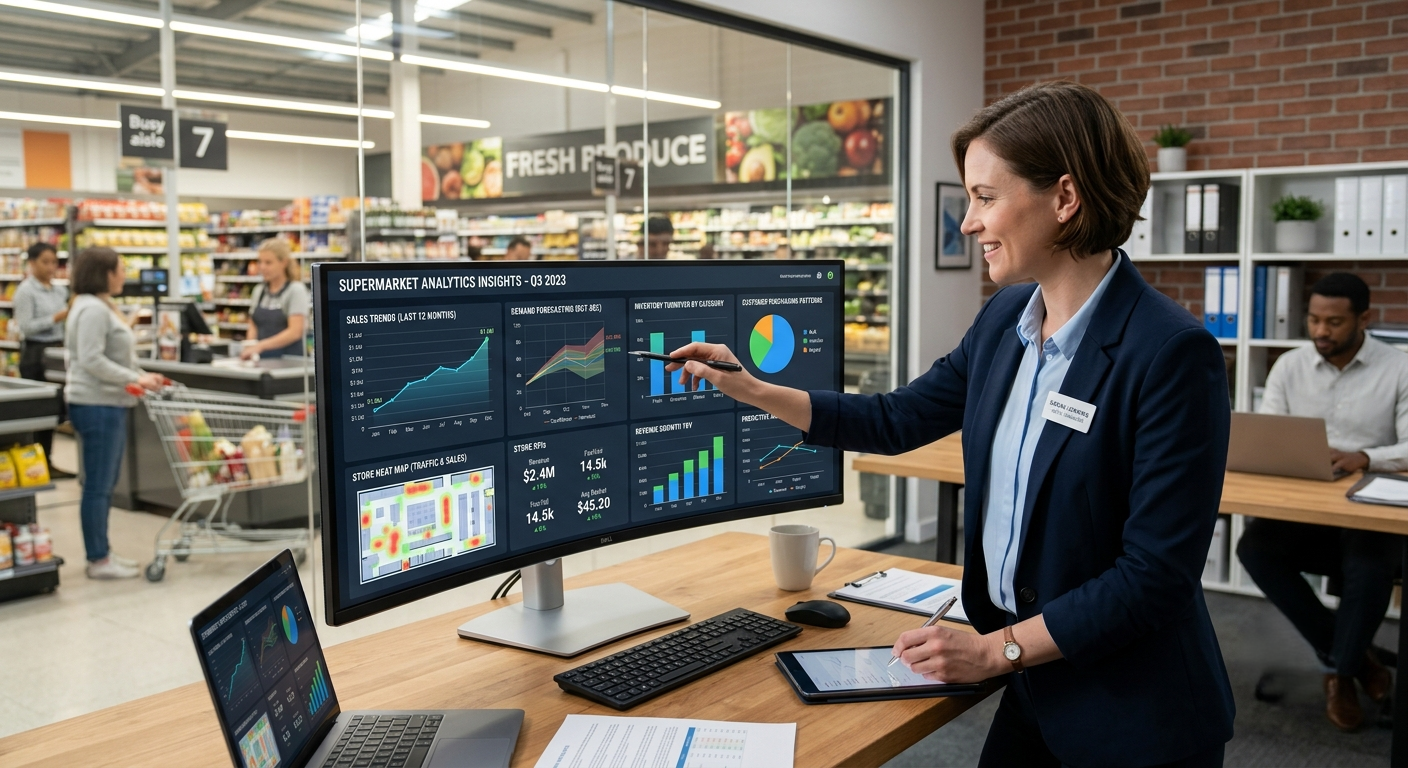
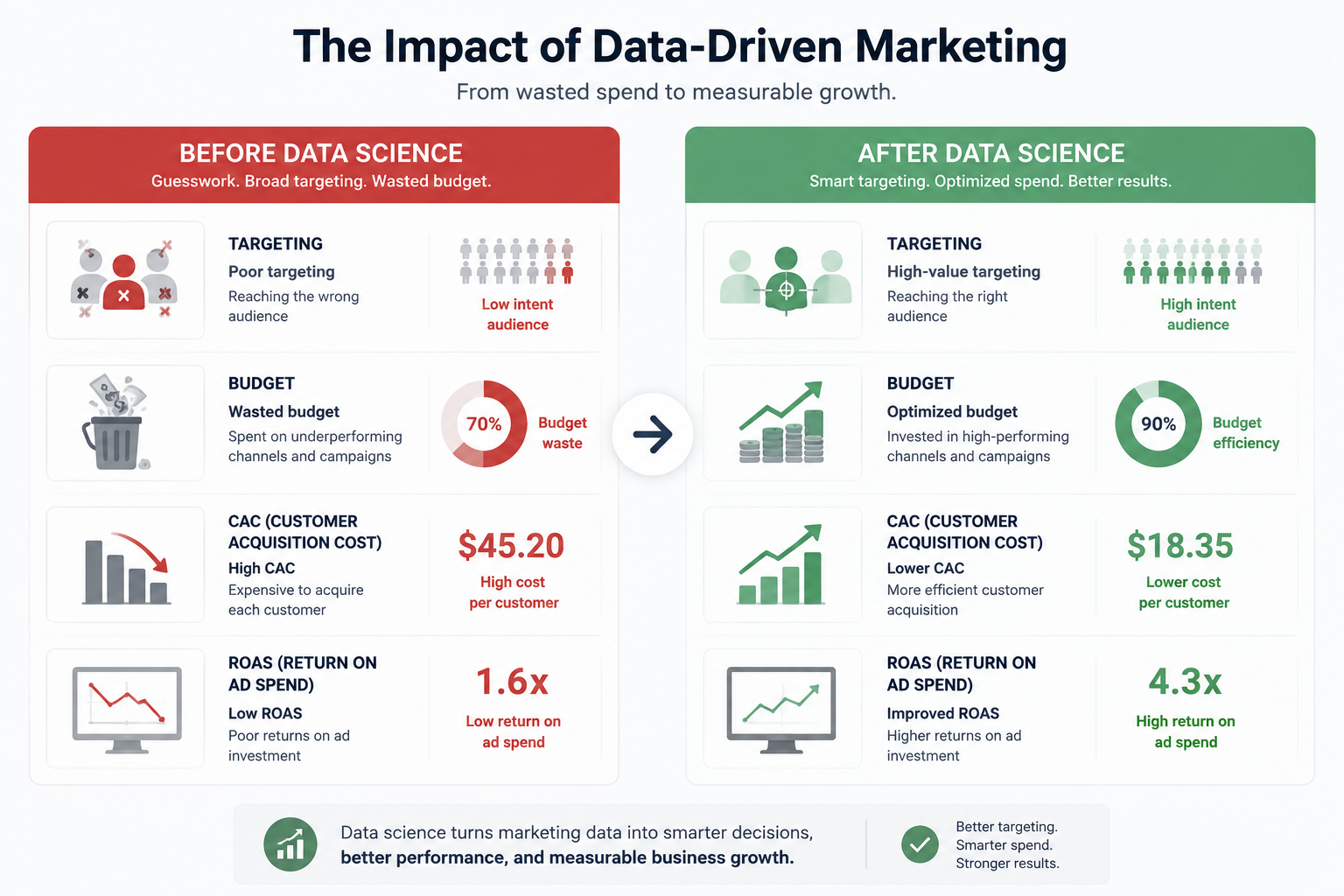
Data science helps retailers move from guesswork to informed decision-making.
Rather than relying solely on assumptions, businesses can use data to understand what is happening across their operations and identify where revenue is being lost.
Demand Forecasting
Demand forecasting helps retailers estimate future customer demand using historical sales patterns and business trends.
Instead of ordering inventory based on intuition, businesses gain a clearer picture of what customers are likely to purchase in the coming weeks and months.
This leads to:
Inventory Optimization
Inventory optimization ensures that the right products are available in the right quantities and locations.
Retailers can identify:
-
Which products are overstocked
-
Which items are consistently understocked
-
Where inventory should be redistributed
-
Which product categories require closer monitoring
The result is improved inventory turnover and reduced carrying costs.
Sales Trend and Seasonality Analysis
Customer purchasing patterns often follow predictable trends.
By analyzing historical sales data, retailers can identify:
-
Seasonal demand fluctuations
-
High-performing product categories
-
Emerging customer preferences
-
Promotional impacts on sales
These insights help businesses prepare for demand changes before they occur.
Customer Purchasing Behavior Analysis
Retail analytics can reveal how customers shop, what products they buy together, and how purchasing habits change over time.
This enables retailers to:
Location-Level Performance Monitoring
Not all stores perform the same way.
Data-driven retail decisions allow businesses to evaluate performance at the location level, identifying differences in demand, inventory movement, and profitability.
Managers can then allocate resources more effectively and respond to local market conditions.
Predictive Analytics
Predictive analytics helps retailers anticipate potential problems before they affect revenue.
Businesses can identify early warning signs such as:
-
Products likely to run out of stock
-
Items at risk of becoming excess inventory
-
Locations with recurring supply chain challenges
-
Emerging demand shifts
This proactive approach helps prevent losses rather than simply reporting them afterward.
Key Business Benefits
When retailers use data to improve inventory management and operational decision-making, the financial benefits can be substantial.
Increased Sales
Better product availability means customers are more likely to find what they want when they visit a store.
Fewer stockouts translate directly into higher revenue.
Reduced Inventory Carrying Costs
Optimized inventory levels reduce the amount of capital tied up in unsold products, improving operational efficiency.
Lower Waste and Spoilage
More accurate demand forecasting helps retailers purchase appropriate quantities, reducing expired and discarded products.
Improved Cash Flow
Inventory is one of the largest investments for many retailers.
Reducing excess stock frees up cash that can be reinvested into growth initiatives, marketing, store improvements, or expansion.
Better Inventory Turnover
Products move through the business more efficiently, reducing storage costs and improving overall profitability.
Smarter Purchasing Decisions
With better visibility into customer demand and inventory performance, procurement teams can make more informed purchasing decisions.
A Real-World Supermarket Example
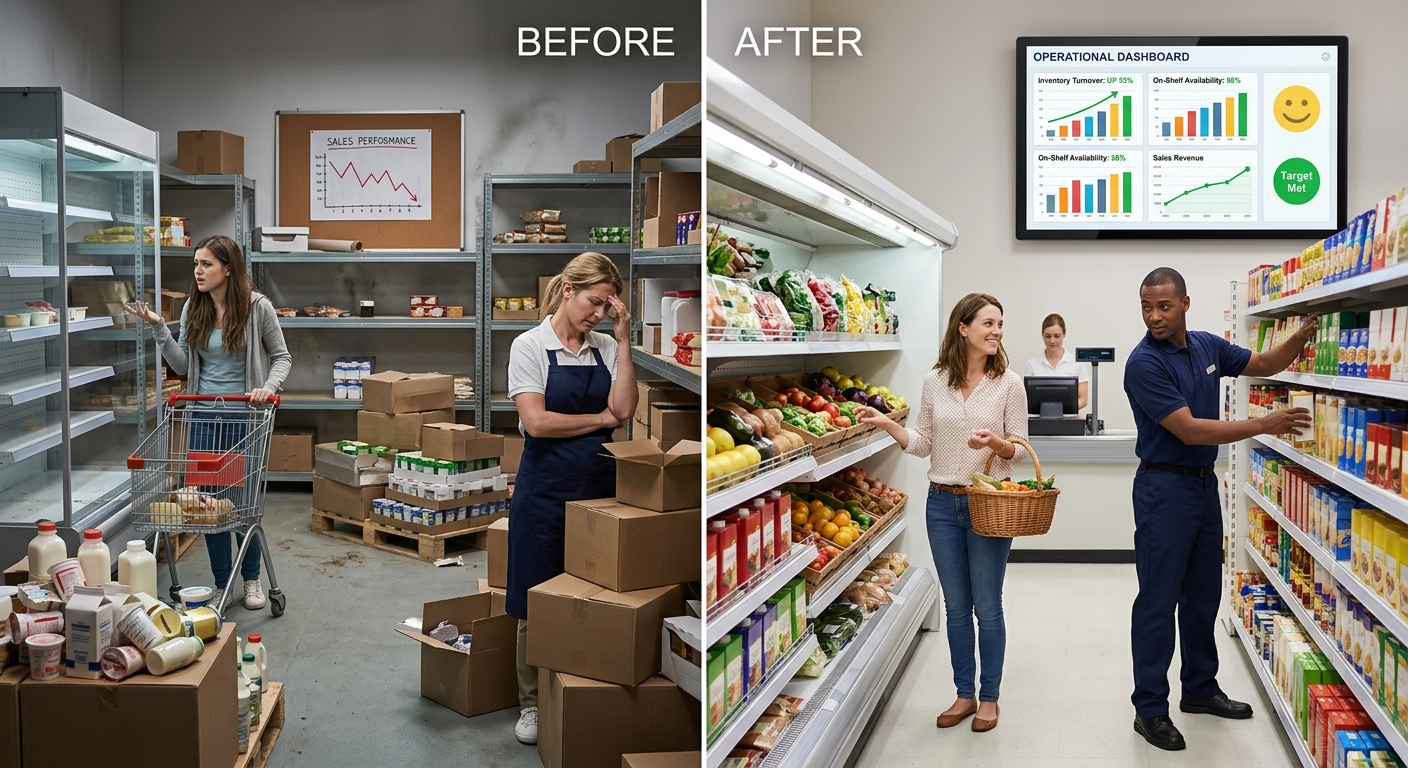
Consider a supermarket chain operating ten locations across a region.
Management notices that profitability is declining despite steady customer traffic.
After reviewing operational data, several issues emerge:
-
Popular products frequently sell out at high-traffic locations.
-
Other stores hold excess inventory of the same products.
-
Fresh produce experiences high spoilage rates.
-
Purchasing decisions are largely based on estimates rather than demand patterns.
The company implements a retail analytics initiative focused on demand forecasting and inventory optimization.
Using historical sales data and location-level performance insights, the business begins to:
-
Forecast demand for individual stores more accurately.
-
Adjust stock levels based on local purchasing patterns.
-
Transfer inventory between locations before shortages occur.
-
Improve replenishment schedules for perishable products.
-
Monitor product performance in near real time.
Within several months, the supermarket experiences measurable improvements:
-
Fewer stockouts of top-selling products.
-
Reduced spoilage of fresh inventory.
-
Lower inventory holding costs.
-
Faster inventory turnover.
-
Improved customer satisfaction.
-
Increased overall retail profitability.
The improvement does not come from selling more products through aggressive marketing alone. It comes from ensuring the right products are available where customers need them while minimizing unnecessary inventory costs.
Why Proactive Retailers Are Embracing Data-Driven Operations
Retail competition is becoming increasingly demanding.
Customers expect product availability, competitive pricing, and consistent shopping experiences. At the same time, retailers face pressure to manage costs and maintain healthy profit margins.
Leading retailers recognize that operational efficiency is no longer a back-office concern—it is a strategic advantage.
Organizations that embrace data-driven retail decisions gain greater visibility into their operations, allowing them to identify inefficiencies, respond faster to changing demand, and make more confident business decisions.
Rather than reacting to problems after profits decline, they continuously monitor performance and take action before losses occur.
In many cases, the greatest opportunities for profit growth are not found through expanding sales alone but through eliminating hidden inefficiencies that quietly reduce revenue every day.
Conclusion
Revenue leakage is one of the most overlooked challenges in retail operations.
Stockouts, excess inventory, spoilage, poor inventory allocation, and inaccurate demand planning can steadily erode profitability without attracting immediate attention.
The challenge is not simply collecting more data—it is using data effectively to uncover hidden losses and support better decisions.
Through demand forecasting, inventory optimization, retail analytics, predictive analytics, and location-level performance monitoring, retailers can gain the visibility needed to improve supply chain efficiency, reduce waste, strengthen cash flow, and increase profitability.
Businesses that understand where revenue is leaking are in a far stronger position to protect margins, improve operational performance, and drive sustainable growth.
Ready to Reduce Hidden Revenue Losses?
Every retailer generates valuable operational data, but many organizations are not fully using it to improve performance.
Our team helps retailers transform sales, inventory, and operational data into actionable insights that support smarter decisions, stronger inventory management, and higher profitability.
Whether you operate a single store or a multi-location retail network, we can help you identify hidden revenue leakage, optimize inventory, improve demand forecasting, and build a more efficient retail operation.
Contact us
today to explore how data-driven retail optimization can unlock measurable improvements in sales, efficiency, and profitability.