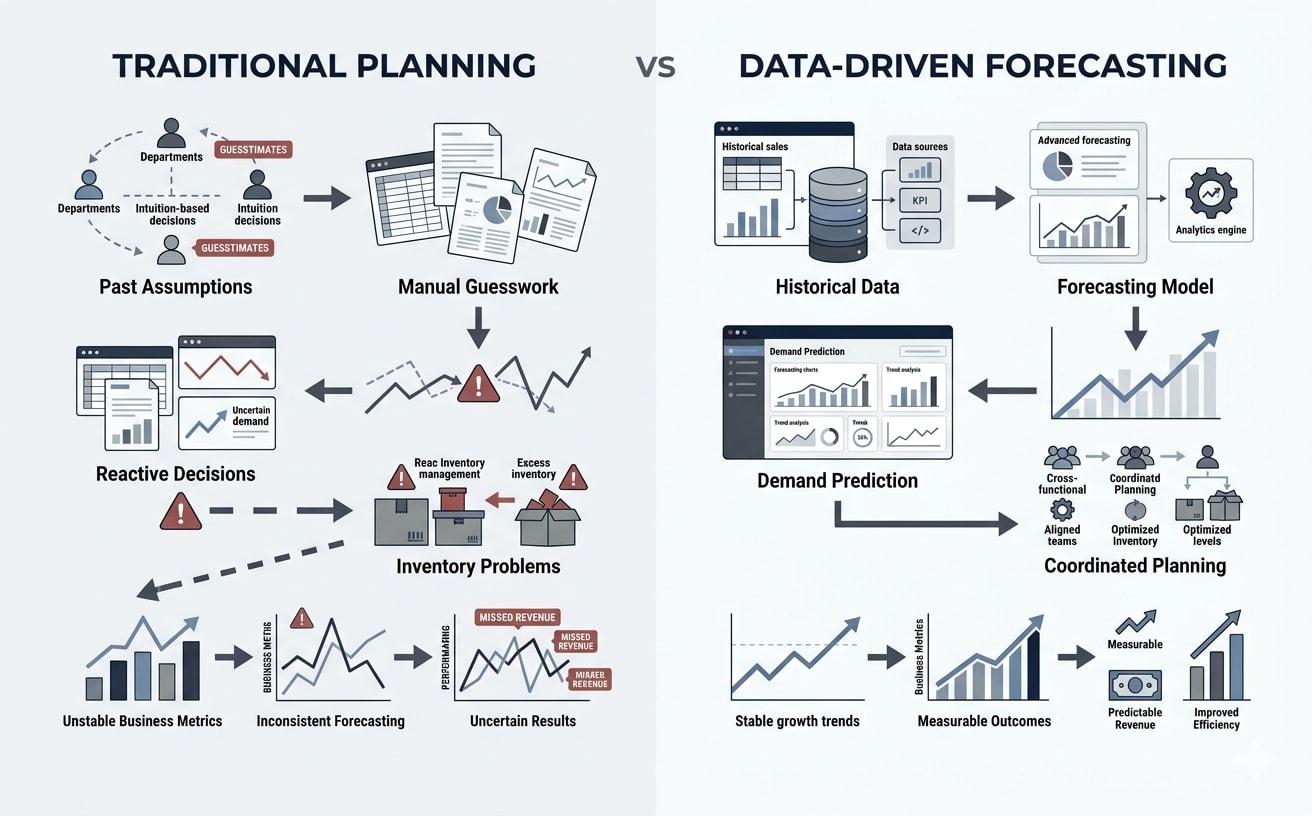
Why Most Businesses Waste 20–40% of Their Marketing Budget and How Data Science Can Fix It

Marketing Isn't the Problem, hidden Inefficiencies Are
Many businesses invest heavily in digital marketing with the expectation that higher spending will lead to more customers and stronger revenue. Yet despite increasing budgets, many struggle with rising customer acquisition costs, inconsistent sales, and disappointing marketing ROI.
The problem often isn't the size of the budget, it's how that budget is being used.
A significant portion of marketing spend is lost to hidden inefficiencies such as poor audience targeting, ineffective campaigns, and decisions based on assumptions instead of evidence. These issues are rarely obvious, but they can quietly reduce profitability over time.
The good news is that marketing waste is measurable. With marketing analytics and data-driven decision-making, businesses can identify where money is being lost and redirect investments toward strategies that generate better results.
Where Marketing Budgets Are Commonly Wasted
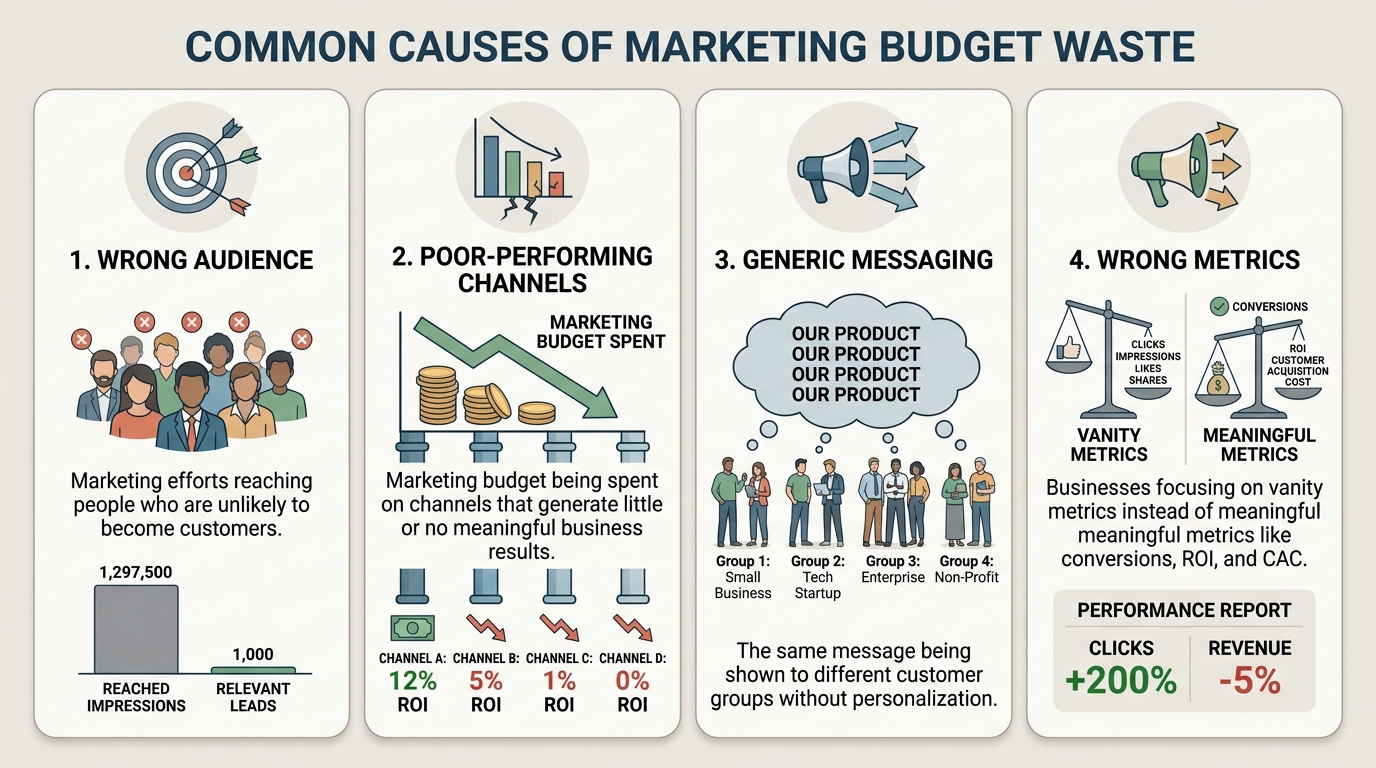
Marketing waste usually stems from a series of small decisions rather than one major mistake.
Targeting the Wrong Audience
Reaching a large audience doesn't guarantee more sales. When ads are shown to people who are unlikely to buy, businesses pay for clicks and impressions that deliver little value.
Better audience targeting ensures marketing budgets are focused on customers with genuine purchase intent.
Treating Every Customer the Same
Not every customer has the same needs or long-term value. Businesses that use the same message for every customer often miss opportunities to increase engagement and conversions.
Customer segmentation allows businesses to group customers based on purchasing behaviour, preferences, and value, making campaigns far more relevant.
Investing in Underperforming Channels
Many companies continue funding marketing channels simply because they've always used them.
Without measuring performance, it's difficult to know which campaigns are generating revenue and which are simply consuming budget. Marketing analytics helps identify where investment should increase and where it should be reduced.
Measuring the Wrong Metrics
Clicks and website traffic can look impressive, but they don't always translate into business growth.
More meaningful metrics include:
-
Marketing ROI
-
Customer Acquisition Cost (CAC)
-
Conversion rate
-
Customer Lifetime Value (CLV)
-
Return on Advertising Spend (ROAS)
These indicators provide a clearer picture of marketing effectiveness.
Why Data-Driven Marketing Outperforms Guesswork
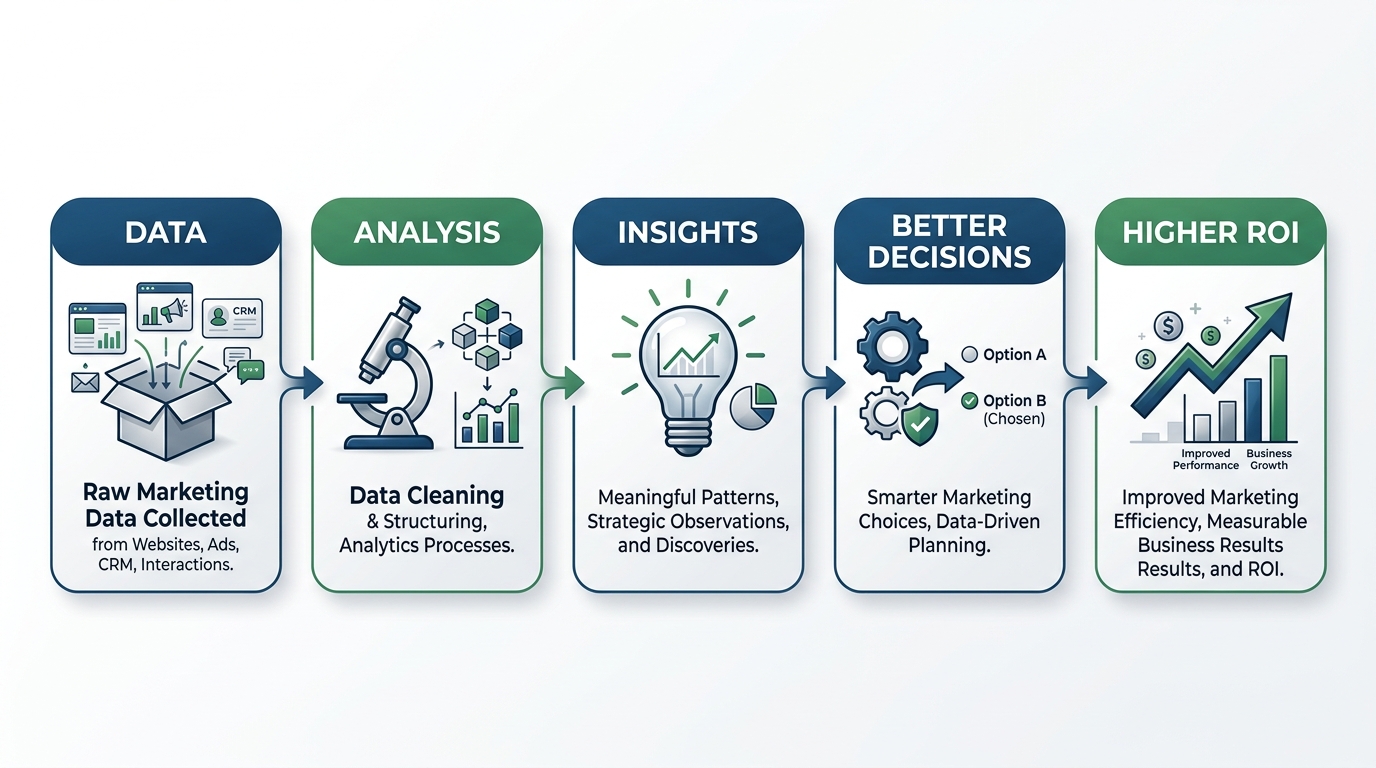
Experience and creativity remain essential in marketing, but today's competitive environment also requires evidence-based decisions.
Businesses generate valuable data from websites, advertising platforms, CRM systems, and customer interactions every day. Without analyzing this information, important opportunities remain hidden.
Data science helps transform this data into actionable insights that support smarter marketing decisions.
How Data Science Improves Marketing Performance
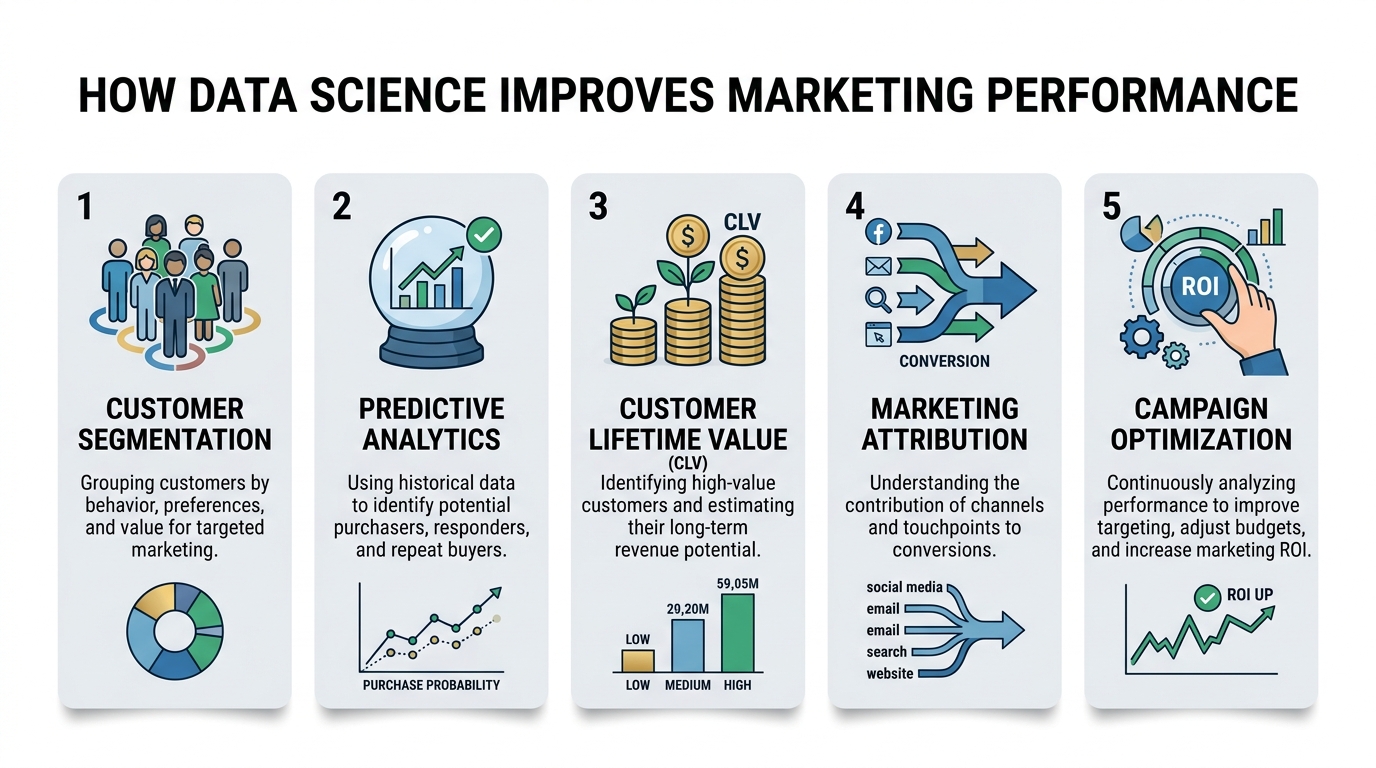
Data science doesn't replace marketers, it helps them make better decisions.
Here are several ways businesses use analytics to improve marketing performance.
Customer Segmentation
Businesses can identify groups of customers with similar behaviors and preferences, making it easier to deliver personalized campaigns that improve engagement and conversion rates.
Predictive Analytics
Instead of reacting after campaigns finish, predictive analytics helps estimate which customers are most likely to purchase, respond to promotions, or become repeat buyers.
This allows businesses to focus marketing efforts where they are most likely to generate results.
Customer Lifetime Value Prediction
Some customers generate significantly more revenue over time than others.
Predicting customer lifetime value helps businesses prioritize acquiring customers who will provide the greatest long-term return rather than simply the lowest acquisition cost.
Marketing Attribution
Customers often interact with multiple marketing channels before making a purchase.
Attribution analysis helps businesses understand which channels truly influence buying decisions, leading to more effective budget allocation.
Campaign Optimization
Continuous monitoring of campaign performance enables businesses to quickly identify underperforming ads, adjust budgets, and improve results while campaigns are still running.
Real-World Example
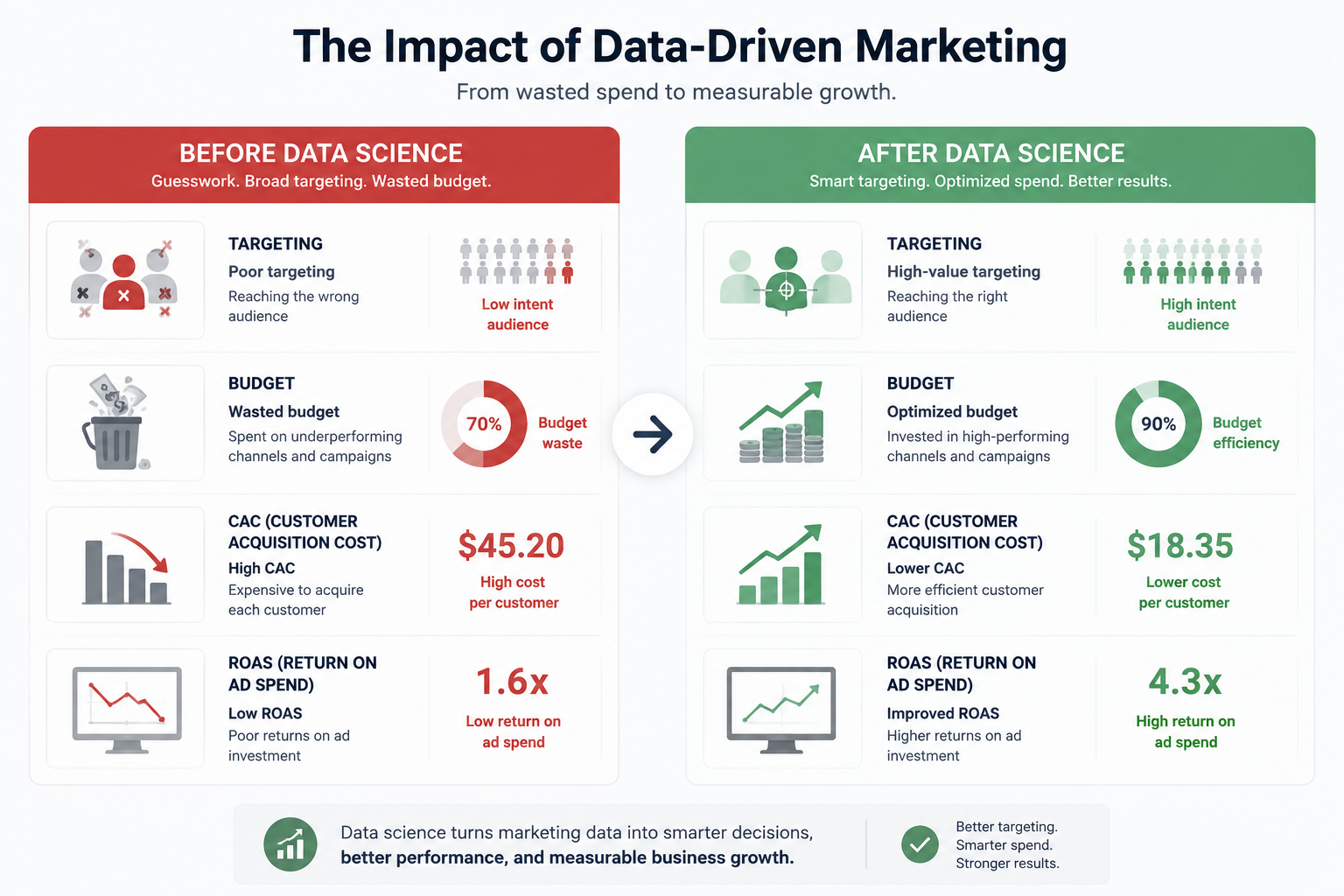
Imagine an e-commerce retailer investing heavily in online advertising but experiencing rising acquisition costs and inconsistent sales.
After analyzing customer and campaign data, the company discovers that a relatively small group of customers generates most of its long-term revenue. It also finds that several advertising campaigns attract many visitors but very few buyers.
Using predictive customer segmentation, the business focuses advertising on high-value audiences, reduces spending on low-performing campaigns, and personalizes promotions for different customer groups.
Within months, the retailer sees measurable improvements:
-
Lower Customer Acquisition Cost
-
Higher conversion rates
-
Improved Return on Advertising Spend (ROAS)
-
Better lead quality
-
Increased repeat purchases
The company doesn't spend more on marketing, it spends more wisely.
The Business Value of Marketing Analytics
When businesses combine marketing expertise with data-driven insights, they gain more than better reports.
They make better decisions.
The results often include:
Higher marketing ROI
Lower customer acquisition costs
Better conversion rates
More efficient marketing budgets
Improved customer retention
Sustainable revenue growth
Instead of relying on assumptions, business leaders can confidently invest in the campaigns and customer segments that deliver measurable value.
Conclusion
Marketing waste is rarely obvious, but it can have a significant impact on profitability. Poor targeting, ineffective budget allocation, and limited visibility into campaign performance often prevent businesses from achieving the returns they expect.
Marketing analytics, predictive analytics, and customer segmentation help organizations uncover these hidden inefficiencies and make smarter decisions based on data rather than guesswork.
As competition increases and advertising costs continue to rise, businesses that embrace data-driven marketing will be better positioned to maximize every marketing dollar and achieve sustainable growth.
Ready to Get More Value from Your Marketing Budget?
If your business is investing in marketing but struggling to improve ROI, data science can help uncover where your budget is being wasted and identify opportunities for better performance.
Our team helps organizations use marketing analytics, predictive insights, and business intelligence to optimize campaigns, reduce customer acquisition costs, and make more profitable marketing decisions.
Contact us today to learn how data-driven marketing can turn your marketing spend into measurable business growth.
Contact US