Scaling Your Business Without Scaling Your Costs.
Growth Should Increase Profits, Not Just Expenses.

Growth is one of the most important goals for any business. More customers, higher sales, and expanding market share are clear signs of success. Yet many organizations discover an unexpected challenge as they grow: costs begin rising almost as quickly as revenue.
A business that doubles its customer base often finds itself hiring more staff, increasing operational overhead, expanding support teams, and investing heavily in manual processes just to keep up with demand. While revenue grows, profit margins can remain stagnant or even shrink.
The question business leaders face is no longer simply how to grow, but how to grow efficiently.
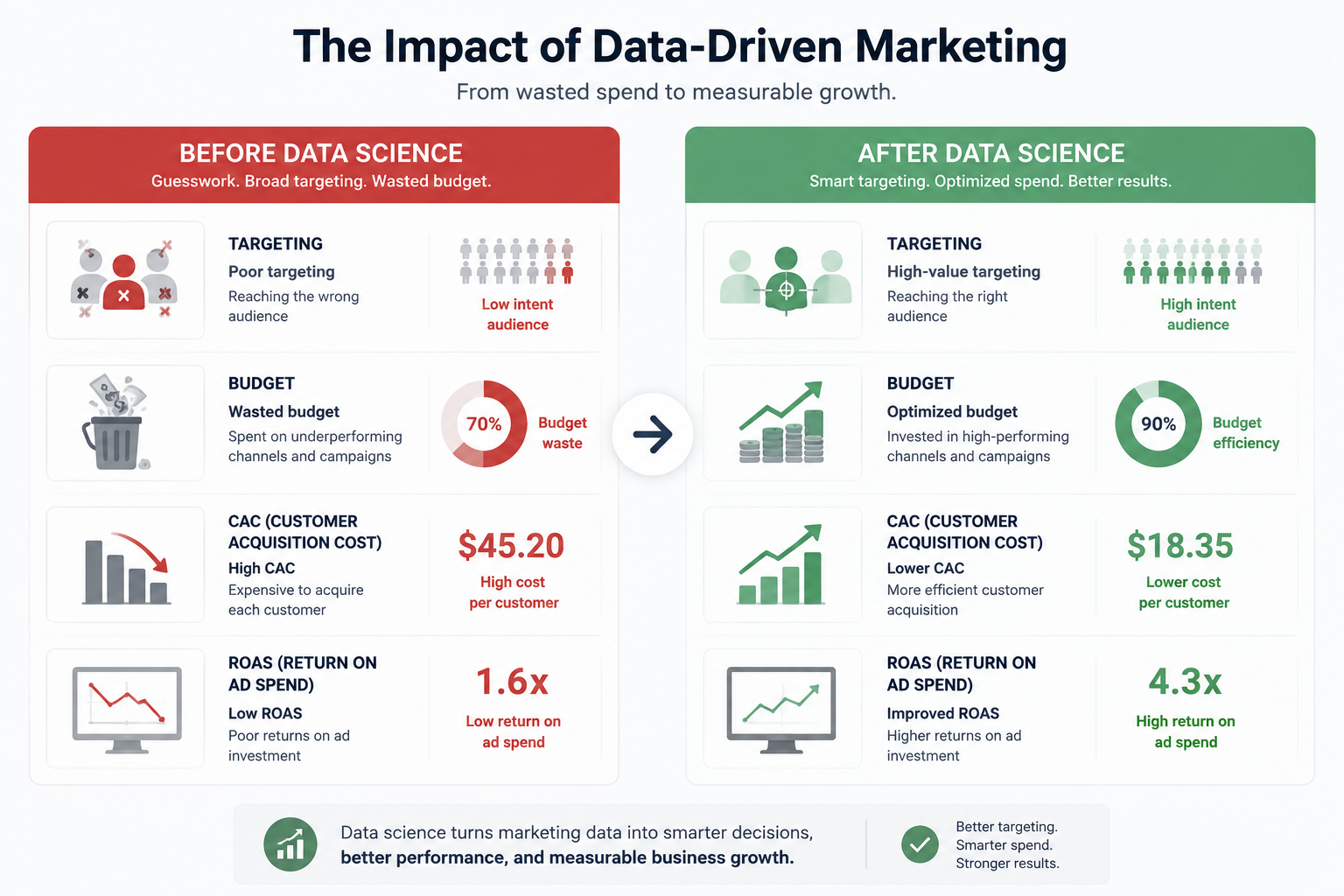
This is where data science, analytics, and intelligent automation are creating a significant competitive advantage. By helping organizations make better decisions, automate repetitive work, and optimize resources, these solutions enable sustainable business growth without requiring costs to rise at the same pace.
Why Growth Often Creates Inefficiency
In the early stages of a business, many processes work because teams are small and operations are manageable. Employees can manually track inventory, handle customer requests, monitor performance, and make operational decisions based on experience.
As the business grows, however, those same processes begin to break down.
Common challenges include:
Increasing Operational Workloads
More customers generate more transactions, more inquiries, and more operational complexity. Teams become overwhelmed, leading to slower processes and reduced productivity.
Manual Decision-Making Bottlenecks
Managers often spend significant time gathering information from different systems before making decisions. As operations expand, this approach becomes increasingly inefficient.
Resource Misallocation
Businesses frequently overstaff, overstock inventory, or invest resources in areas that deliver limited returns because they lack visibility into actual demand and performance.
Rising Operational Costs
Without efficient systems, growth often requires additional employees to handle repetitive tasks, increasing payroll expenses and reducing profitability.
Reduced Visibility
As operations become more complex, leaders can struggle to identify inefficiencies, forecast future needs, and respond quickly to changing market conditions.
The result is a common but costly pattern: growth that creates more work rather than more value.
How Data Science Helps Businesses Scale Smarter

Efficient growth depends on making better use of existing resources. Data science supports this objective by transforming operational data into actionable business intelligence.
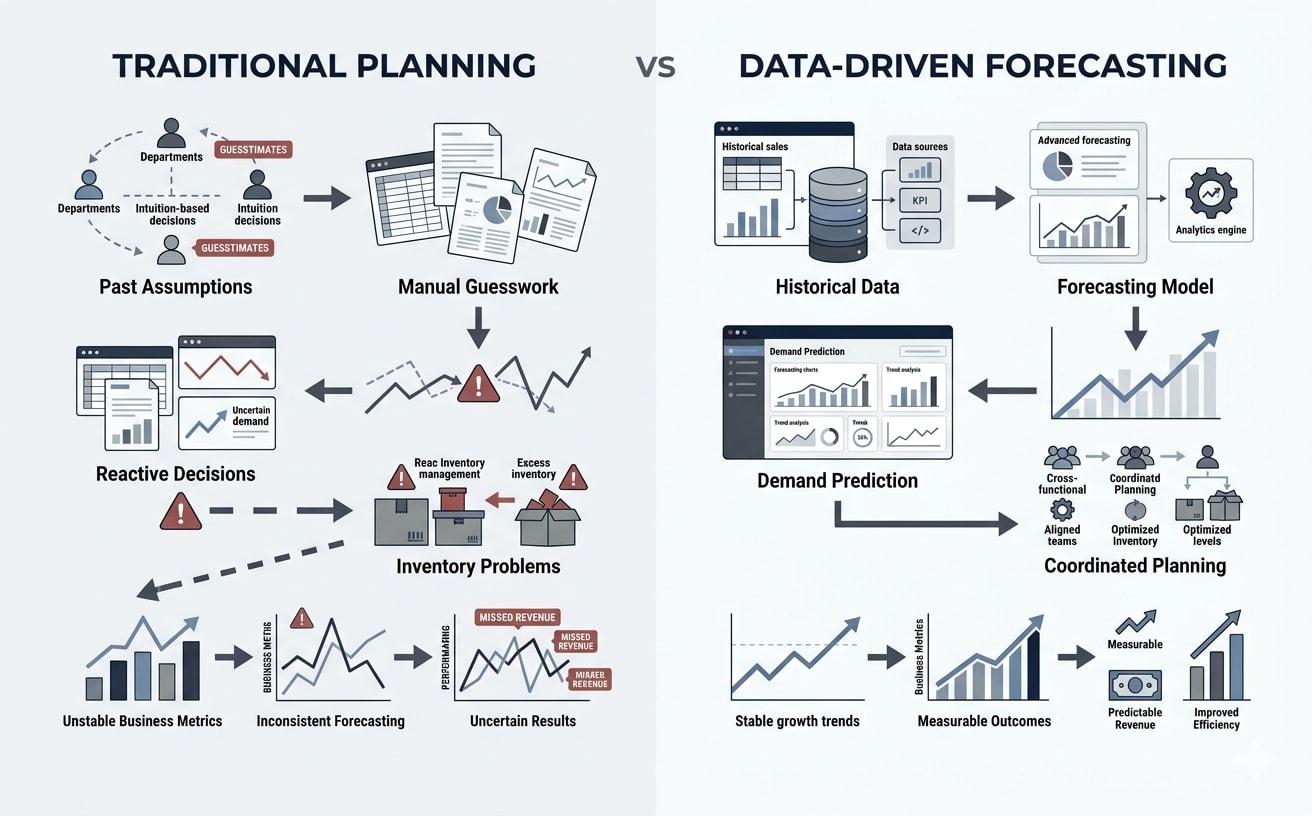
Rather than relying solely on historical experience or manual reporting, organizations can use data-driven decision making to identify opportunities, anticipate challenges, and improve operational efficiency.
Process Automation
Many business activities involve repetitive and time-consuming tasks. Order processing, reporting, inventory monitoring, customer support workflows, and routine operational checks can often be automated.
By reducing manual effort, businesses free employees to focus on higher-value activities such as customer relationships, strategy, and innovation.
The outcome is not simply lower labor costs; it is greater productivity across the organization.
Predictive Analytics
One of the most valuable capabilities of modern analytics is the ability to identify likely future outcomes based on historical patterns.
Predictive analytics can help organizations anticipate:
-
Customer demand
-
Sales fluctuations
-
Inventory requirements
-
Resource needs
-
Seasonal trends
This allows leaders to make proactive decisions instead of reacting after problems occur.
Demand Forecasting
Many businesses lose money because they either underestimate or overestimate demand.
Accurate forecasting helps organizations maintain appropriate inventory levels, schedule resources effectively, and avoid unnecessary expenditures.
Instead of carrying excess inventory or scrambling to meet unexpected demand, businesses can operate with greater precision.
Resource Optimization
Every business has finite resources; people, time, inventory, equipment, and capital.
Data-driven insights help organizations determine where those resources generate the greatest return. This leads to better allocation decisions and stronger operational performance.
Operational Intelligence
Leaders need visibility into what is happening across the business.
Modern analytics solutions provide real-time insights into performance, allowing decision-makers to identify bottlenecks, monitor key metrics, and respond quickly to emerging issues.
The result is a more agile and scalable organization.
Key Business Benefits
When implemented strategically, data science delivers measurable business value that extends well beyond technology.
Higher Profit Margins
By reducing waste, improving productivity, and optimizing operations, businesses can increase profitability without relying solely on revenue growth.
Reduced Operational Costs
Process automation and improved forecasting reduce unnecessary spending, excess inventory, and inefficient resource allocation.
Better Resource Allocation
Data-driven insights help organizations invest time, capital, and personnel where they generate the greatest impact.
Increased Productivity
Employees spend less time on repetitive administrative work and more time on activities that support growth and customer satisfaction.
Improved Decision-Making
Leaders gain access to timely, reliable information that supports faster and more confident decisions.
Sustainable Long-Term Growth
Scalable business operations allow organizations to support increasing demand without continuously expanding costs at the same rate.
Greater Operational Efficiency
Every improvement in workflow, forecasting, and resource management contributes to a more efficient and resilient business model.
A Real-World E-Commerce Growth Scenario
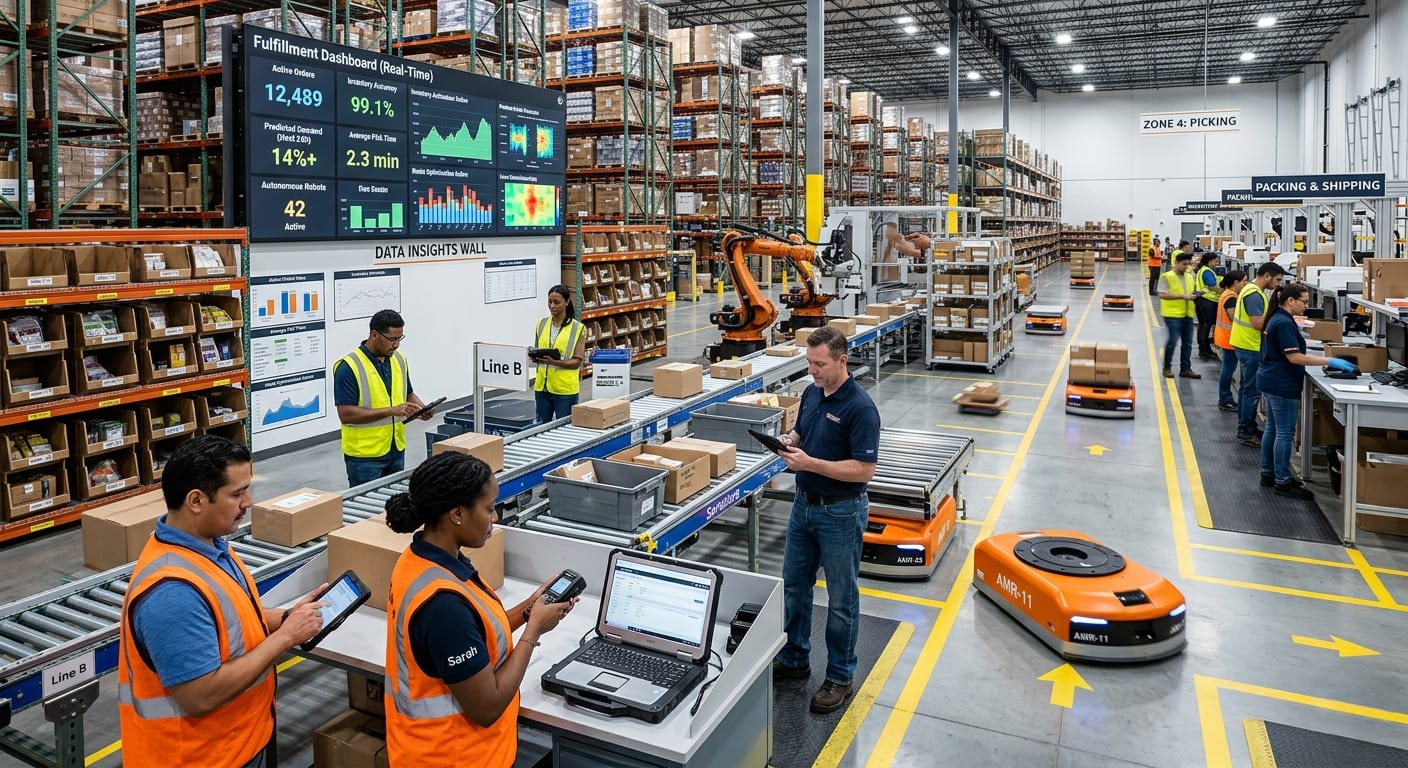
Consider a rapidly growing e-commerce company experiencing a significant increase in online orders.
Initially, the business manages inventory manually and relies on staff experience to estimate future demand. As order volumes rise, new challenges emerge.
Some products regularly run out of stock, leading to lost sales and dissatisfied customers. Other products are overstocked, tying up valuable capital in inventory that sits unused. Warehouse teams spend increasing amounts of time locating products, processing orders, and managing stock discrepancies.
To address these challenges, the company implements a data-driven operational strategy.
Using predictive analytics and automated demand forecasting, the business begins analyzing historical sales patterns, seasonal trends, customer purchasing behavior, and product performance.
The system helps forecast future inventory requirements with greater accuracy.
At the same time, inventory management processes become more efficient. The company can identify which products require replenishment, when orders should be placed, and how inventory should be distributed across warehouse locations.
Warehouse operations are also optimized by identifying workflow bottlenecks and improving order fulfillment processes.
Within months, the company experiences several meaningful improvements:
-
Reduced stock shortages
-
Lower inventory carrying costs
-
Faster order processing times
-
Improved warehouse productivity
-
Better inventory accuracy
-
Stronger customer satisfaction
Most importantly, the business is able to support continued revenue growth without hiring warehouse and inventory staff at the same pace.
Revenue increases substantially while operational costs grow much more slowly, improving overall profitability.
This is the essence of efficient scaling: achieving more output from smarter operations rather than simply adding more resources.
Why Sustainable Growth Requires Data-Driven Decisions
Markets are becoming more competitive, customer expectations are rising, and operational complexity continues to increase.
In this environment, intuition alone is rarely enough.
Organizations that consistently outperform their competitors are often those that make decisions based on evidence rather than assumptions. They understand where inefficiencies exist, where opportunities are emerging, and how resources can be deployed most effectively.
Data-driven decision making enables leaders to move from reactive management to proactive growth.
Instead of asking:
"What happened?"
They can ask:
"What is likely to happen next, and how should we prepare for it?"
That shift creates a powerful advantage.
Businesses gain greater control over costs, improve operational efficiency, and build scalable systems capable of supporting long-term growth.
Conclusion
Growth should not require a proportional increase in expenses.
Organizations that rely solely on adding staff, increasing operational overhead, or expanding manual processes often find it difficult to maintain healthy profit margins as they scale.
Data science, predictive analytics, and process automation offer a more sustainable path forward.
By improving forecasting, optimizing resources, streamlining workflows, and enabling better decision-making, businesses can create scalable business operations that support growth while controlling costs.
The result is stronger profitability, greater operational efficiency, and a business that is positioned for long-term success.
Ready to Scale Smarter?
Sustainable growth starts with understanding how your business operates today and where opportunities for improvement exist.
Our team helps organizations use data science, analytics, and intelligent automation to improve operational efficiency, reduce costs, and support profitable growth.
Whether you're looking to optimize processes, improve forecasting accuracy, or build a more scalable operating model, we can help you turn data into measurable business results.
Contact us
to explore how data-driven solutions can help your business grow faster, operate smarter, and scale with confidence.