Stop Chasing Funding. Start Building a Real Business.
By Adedapo Adeniran · Apr 09, 2026
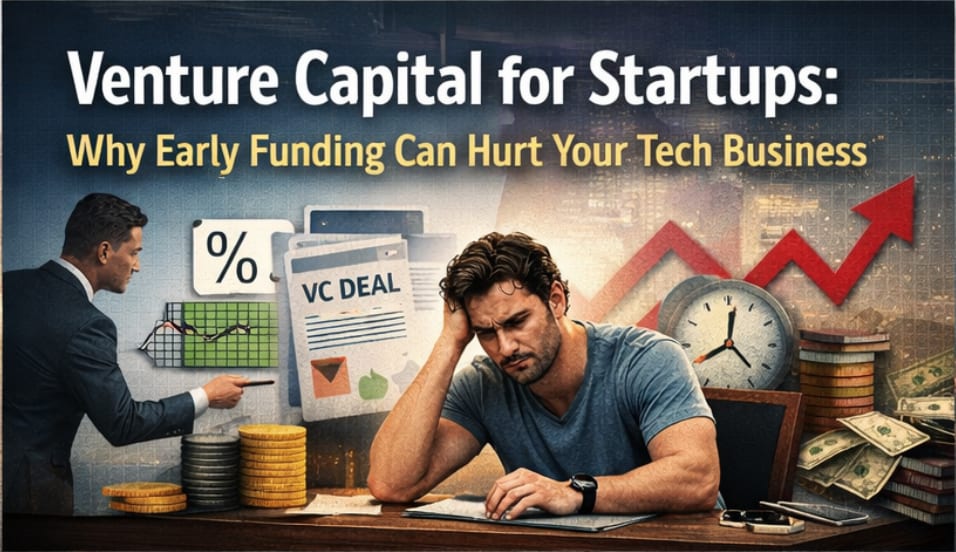
If your first instinct when starting a tech business is to pursue funding from venture capital firms, it is worth reassessing your model. Funding plays a role in scaling, but an early fixation on investors often signals a deeper issue: the absence of a validated, functional business.
Many founders rush into pitching without fully understanding the structural cost of institutional capital. Premature funding does not just introduce capital, it introduces constraints on ownership, control, and long-term outcomes.
The Reality of Tech Business Models
A compelling pitch is not a substitute for a working business. Investors are not funding ideas in isolation; they are funding evidence.
Without early traction, whether in revenue, user growth, or retention, most funding attempts will fail. This is not due to poor storytelling but due to insufficient validation. The market, not the pitch deck, is the primary proof point.
Historical patterns reinforce this. Some of the most successful technology companies focused first on building viable products:
Apple and Microsoft raised approximately $1 million each in early funding
Amazon raised about $8 million
Google raised roughly $25 million
Collectively, these companies built foundational traction before scaling aggressively. Their early restraint in fundraising reflects a critical principle: capital should accelerate a working system, not compensate for the absence of one.
There is also a structural reality often overlooked. Venture capital rewards continuous fundraising. A company can be profitable and sustainable yet still fall outside the definition of success within a VC framework if it is not scaling aggressively through repeated rounds.
Equity Dilution and Control Trade-offs
Venture capital is not neutral capital. It comes with explicit trade-offs.
In a typical early-stage deal:
Investors may take about 30% equity
An employee option pool of 10 to 15% is often required
Equity is further split among co-founders
After these adjustments, a founding CEO may retain less than 30% ownership.
Control is also diluted. Investors typically:
Take board seats
Influence strategic decisions
Enforce governance structures and reporting cycles
At this point, the company is no longer founder-controlled in the pure sense. Decision-making becomes shared and often constrained by investor expectations.
The Pressure to Scale and Exit
Accepting venture capital fundamentally changes the operating model of the business.
The company is now expected to:
Increase valuation rapidly
Pursue aggressive growth
Work toward a defined exit such as an acquisition or IPO
If these conditions are not met, founders may see limited or no financial return despite years of work.
Additionally, founder equity is typically subject to vesting schedules. Ownership is earned over time, meaning founders are contractually tied to the company’s performance and investor-aligned goals.
This creates a high-pressure environment where strategic decisions are driven less by sustainability and more by growth velocity.
Key Takeaways
Funding does not validate a business. Traction does
Early capital often leads to significant dilution and reduced control
Venture-backed success metrics differ from traditional business success
Scaling pressure increases immediately after funding
A More Durable Approach
A more resilient strategy is to prioritize operational traction before seeking external capital. This includes:
Validating the product/service with real users
Establishing early revenue streams
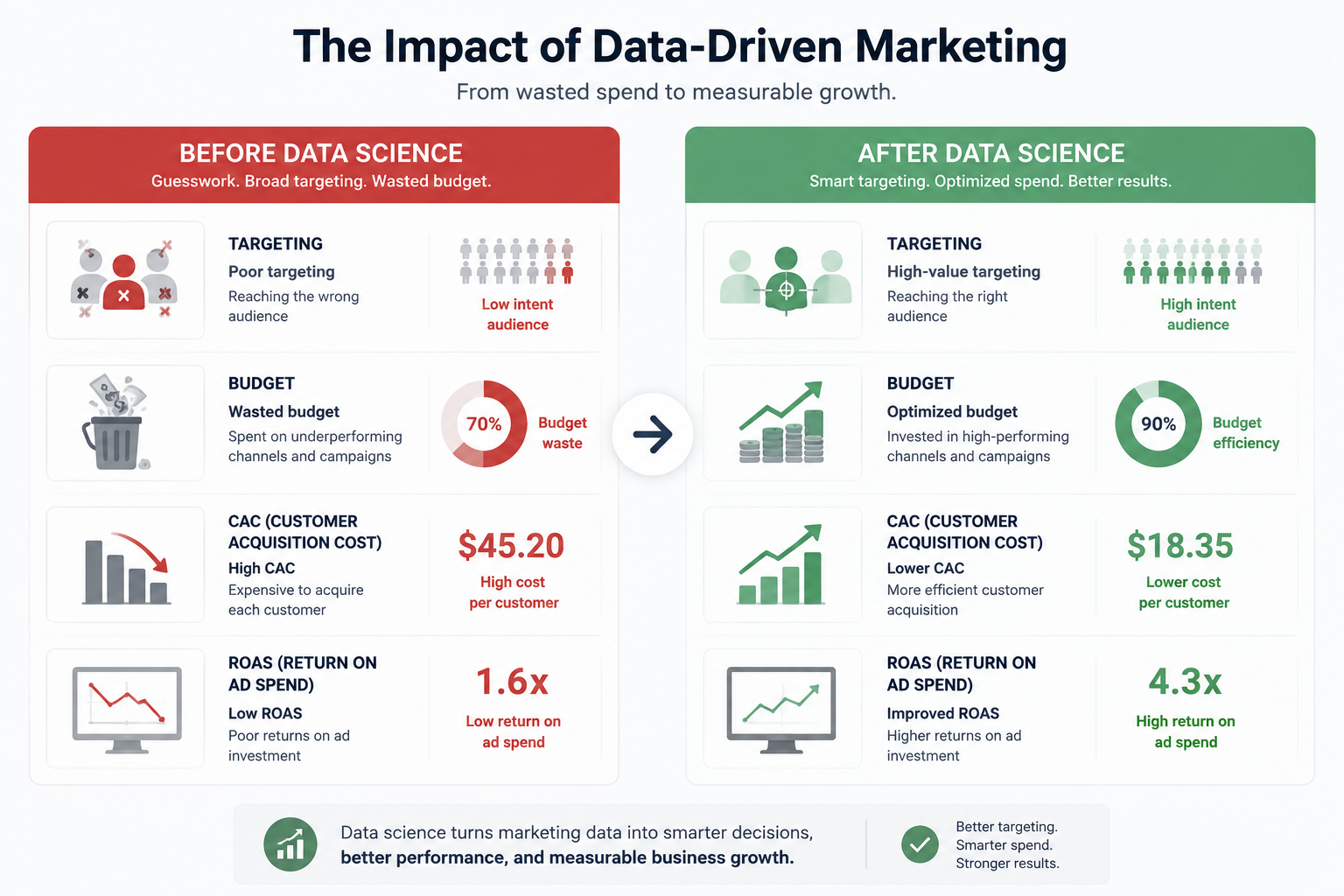
Using data to refine and optimize the business model
Capital is most effective when it amplifies an already working system.
Grow Smarter With Data Intelligence
At Brainydaps Technology Limited, we help businesses build that foundation.
As an Artificial Intelligence and Data Science company, our focus is on enabling companies to:
Validate their models with real data
Optimize operations for efficiency and growth
Establish measurable traction before scaling
Before engaging investors, the priority should be clarity on your product/services, your users, and your revenue engine.